
Why has Besigye gone to Nairobi?

Dr. Kizza Besigye was finally allowed to fly to Nairobi to seek treatment for his battering yesterday at the hands of (flower-print shirted, h/t Rosebell) plainclothes state security operatives. NTV has footage of his departure:

I am very glad Dr. Besigye was ultimately allowed to fly (@AndrewMwenda suggests maybe he needs to invest in a boat now that walking, driving and flying are forbidden), but let’s remember why he needs to go to Nairobi in the first place (apart from his brutal treatment). There are no hospitals in Uganda that come close to rivaling the best of those of Kenya or South Africa. Those who get care in Mulago or IHK are the luckiest.

Beyond the overburdened national referral hospital and private hospitals (the latter of which are impossibly expensive for most), the health sector in Uganda is in a pathetic state. Health worker absenteeism, drug leakage, and even ghost clinics are rampant. A 2007 survey found that only 6% of Uganda’s hospitals had the basic infection control elements (soap, running water, latex gloves, etc.). 1 in 8 children will not live to see their first birthday, meaning that nearly 500 of the 4000+ born each day will have died within the next five years. Maternal mortality has not improved by any statistically significant amount from 1995 to 2006, when the last Demographic and Health study was completed (Uganda DHS 2006 pg.282).

The failures of the health sector are to a large extent, a failure of governance.

Yes, it is terrible that security forces attempted to stop Besigye from seeking the medical treatment he so desperately needs and deserves. It literally added insult to a horribly unjust injury. But even more terrible is that Besigye is only one of millions of Ugandans who desperately need quality health care. And most aren’t getting it.
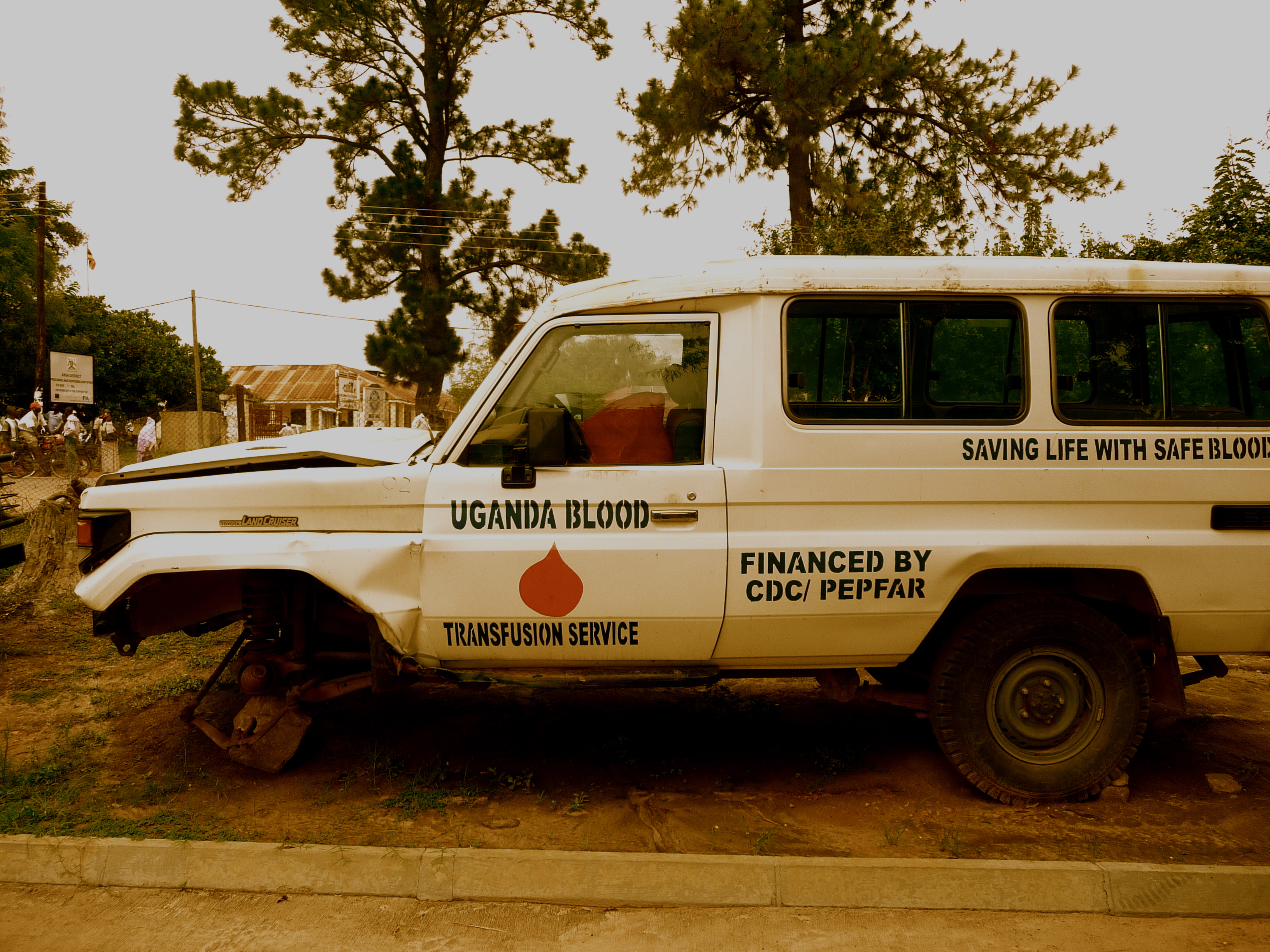
Is the AIDS industry hurting public health?

Is HIV/AIDS funding distorting health priorities in ways that actually harm efforts to improve public health? If so, how? These are questions I have wondered about for a long time. In 2008, the U.S. government spent $283 million dollars in Uganda on the HIV/AIDS sector via the President’s Emergency Plan for AIDS Relief (PEPFAR). In the same year, the Ugandan government spent approximately $180 million on the entire health sector. What impact does PEPFAR levels of donor funding for HIV/AIDS have on the recipient country’s health priorities? On the amount of money spent on other health issues? On the number of doctors that work in primary care?

Tapiwa Gomo of Newsday writes:
” … The UNAIDS projects that by 2015, the annual resource needs will reach $54-57 billion (a total of approximately $172 billion in three years) which could avert 2,6 million new infections and 1,3 million deaths. Still this is not enough to cater for the 33 million people living with the virus today.
As a result of the presence of such huge financial figures, the HIV and Aids industry has uncontrollably grown in size and budget, thanks to the generous donors who can finance anything or anyone as long as there is an HIV and Aids dimension in the proposals.
However, what concerns some experts is that the impact of this colossal and resource-guzzling industry is not parallelled by results on the ground, in addition to the damage it has caused on the public health sector especially in Third World countries...”

The article in full can be found here.

I only have speculative and anecdotal evidence pointing to negative side effects of gargantuan HIV funding, but I am currently working on a project that I hope will provide more quantitatively sound evidence. More on this as the project comes along.

NYT Uganda coverage

Denise Grady explains how a woman who caught the Marburg virus in Uganda has become a medical celebrity. And Uganda tourism takes another blow. Damn.

“Michelle Barnes never imagined that her vacation to Uganda would make her a medical celebrity.

Ms. Barnes, 44, became ill in January 2008, a few days after returning home to Golden, Colo. At first, she seemed to have a typical case of traveler’s diarrhea, but she soon worsened. She broke out in a rash and developed abdominal pain, terrible fatigue, weakness and confusion. Blood tests found her white-cell count low and her liver and kidneys beginning to fail. She was hospitalized, still deteriorating. Her blood was taking too long to clot, and her pancreas and her muscles were inflamed…”

Not to mention, while demonstrating much concern for the doctors and staff in the US, there is zero discussion of the spread of the virus in Uganda from what I can tell.

What do people care about?

I love knowledge for the sake of knowledge, but as I embark on this five-year journey otherwise known as grad school, one thing I don’t want to do is get stuck inside, both literally and figuratively. Literally, I don’t want to see the sky for only 20 minutes a day on the walk to and from the car, and figuratively (and more importantly), I don’t want to get stuck in a world where only other academics or econ-y types find my work interesting/palatable/intelligible. This has been on my mind a lot recently as I have been trying to home in on a specific research question for my first major research project/paper (which I will hereafter refer to as a field paper). I can think of lots of research questions, but certainly not all of equal pertinence to the lives of ordinary people. Which got me thinking, what would be of most pertinence? I am not a doctor, I am not a teacher (yet, anyway), I am not a civil engineer…there are many things I can’t do to improve people’s lives. So what can I do? Well, hopefully (and this is the goal anyway, I think), I will be able to provide some small insight or suggestion to help solve problems people care about.  So what do people care about?

Since Uganda is mostly on my mind, I remembered a recent Afrobarometer survey asked exactly this question. Ok, not exactly. The exact question was, “What are the most important problems facing this country that the government should address?” The answers? (according to % of people who listed this concern first)

Poverty/Destitution: 43%

Unemployment: 28%

Health: 27%

Food shortage: 20%

Infrastructure/Roads: 20%

Seems pretty obvious in retrospect. But what wasn’t in the top 5? Democracy/Political Rights (3%), Orphans (2%), Political Instability/Ethnic Tensions (2%), International War (0%), AIDS (5%), and Inequality (2%), among others. Less obvious now, right? This is not to say that no one cares about these things, just that they are not the most important things for most people. Of course these things are also related to the above “most important problems”, and it could be that democracy (or something else) will solve all of these problems (I am skeptical though). Still, I think it’s always good to keep in mind what people are struggling with on a daily basis even while trying to figure out what’s up with democratic peace (for example).

Now, back to that field paper…

Why Don’t We Have a Global Fund for Maternal Health?

Well, cause someone would steal the money anyway. No? Ok, how about because the international community is preoccupied (is obsessed too strong a word?) by the much more exotic sounding tropical and infectious diseases (a virus that turns your insides to mush = exciting/terrifying, bleeding to death giving birth = boring). Not everyone gets Ebola or HIV or malaria, but most people either give birth or are the direct cause of someone else giving birth (and if nothing else, at least someone once gave birth to them). So maternal health is ordinary, banal, and just plain not-sexy. That is, unless it is tied to something exotic (see Prevention of Mother-to-Child Transmission of HIV — PMTCT)…

The wards described in the article of the Tanzanian hospital are not different from those in Uganda. In Mugalo Hospital, around 80 to 100 babies are delivered every day, and there are certainly not enough beds for all the mothers. One medical student working in the labour ward described to me how the “fluids” from one mother giving birth flowed into the ears of another mother who was sharing her mattress one night during his shift.

I don’t know what the solution is to the neglect of maternal health. In Uganda, maternal mortality statistics have barely budged in the past 20 years. The 2006 Uganda Demographic and Health Survey (depressingly) discusses the lack of improvement with regard to maternal mortality:

At first glance, it would appear that the maternal mortality ratio has declined significantly
over the last five years, from 527 maternal deaths per 100,000 live births for the ten-year period prior to the 1995 UDHS to 505 for the ten-year period before the 2000-01 UDHS, and to 435 for the ten- year period before the 2006 UDHS. However, the methodology used and the sample sizes implemented in these three surveys do not allow for precise estimates of maternal mortality. The sampling errors around each of the estimates are large and, consequently, the estimates are not significantly different; thus, it is impossible to say with confidence that maternal mortality has declined. Moreover, a decline in the maternal mortality ratio is not supported by the trends in related indicators, such as antenatal care coverage, delivery in health facilities, and medical assistance at delivery, all of which have increased only marginally over the last ten years.

First do no harm. Ok, first do not-too-much harm…what? You don’t know how much you’re doing? Well in that case…

“…apart from questions over its investments, the Gates Foundation has received little external scrutiny. Last year, Devi Sridhar and Rajaie Batniji reported that the Foundation gave most of its grants to organisations in high-income countries. There was a heavy bias in its funding towards malaria and HIV/AIDS, with relatively little investment into tuberculosis, maternal and child health, and nutrition—with chronic diseases being entirely absent from its spending portfolio. In The Lancet today, David McCoy and colleagues extend these findings by evaluating the grants allocated by the Gates Foundation from 1998—2007. Their study shows even more robustly that the grants made by the Foundation do not reflect the burden of disease endured by those in deepest poverty. In an accompanying Comment, Robert Black and colleagues discuss the alarmingly poor correlation between the Foundation’s funding and childhood disease priorities.
The concern expressed to us by many scientists who have long worked in low-income settings is that important health programmes are being distorted by large grants from the Gates Foundation. For example, a focus on malaria in areas where other diseases cause more human harm creates damaging perverse incentives for politicians, policy makers, and health workers. In some countries, the valuable resources of the Foundation are being wasted and diverted from more urgent needs.”

Excerpt from 9 May 2009 Lancet editorial.

This is the same point I have tried to make with regard to HIV/AIDS funding in Uganda. But it is hard to tell/convince donors that their massive spending on HIV/AIDS may actually be hurting other healthcare programs (not to mention that the funding decisions are often made by those in Washington, etc who have no idea what is going on on the ground). The response of the program and project managers, of course, is that they believe they are helping more than hurting. There are at least two problems with this argument though. One, measuring how much one is helping or hurting a country/population/sector/etc is difficult, especially as unintended/unrecognized consequences abound (i.e. doctors migrating from cash-starved district health centers to donor-funded HIV clinics). Two, what happened to “first do no harm”? Should one even be involved if the consequences of one’s actions cause harm of unknown/unquantifiable amounts?

The good news is that the discussion regarding priorities/allocation of money within the health sector is emerging in policymaking circles — New Vision, for example, reports today that parliament has recommended sh36b earmarked to purchase anti-retrovirals (ARVs) be re-allocated to other pressing government programmes. (Although, reading through the article again, I am thoroughly confused as to what MPs are proposing…anyone have insight?)

Meanwhile, Easterly and Wronging Rights have an interesting (and related) discussion on aid and the Love Actually Test.

No one cares about our nations more than we do

We appreciate support from the outside, but it should be support for what we intend to achieve ourselves. No one should pretend that they care about our nations more than we do; or assume that they know what is good for us better than we do ourselves. They should, in fact, respect us for wanting to decide our own fate.

Says Kagame in his op-ed last week in the Financial Times.

While I am concerned that certain individuals high up in the echelons of power actually care about themselves far more than their nations, I agree wholeheartedly with Kagame’s sentiment. Especially the bit about supporting a country’s own priorities, whether they be in health, education, infrastructure, etc., and not simply making up your own.

I wrote about donor distortions to Uganda’s health sector in this week’s Independent. I don’t think many U.S. taxpayers, for example, realise that they are contributing more to fighting HIV/AIDS in Uganda than the Ugandan government is contributing to Uganda’s health sector in its entirety. This is unacceptable on a number of levels. The current state of affairs is not the fault of only one party, but the donor/recipient relationship will never be equal and those involved should act/think accordingly, political correctness of “partnership” notwithstanding.

Rwanda Rwanda

I’ve just returned from a week in Kigali. Unfortunately my power adapter blew out the first night so I was basically computer/internet-less for the week (especially since internet at Bourbon Cafe is 4000 francs after the first hour!!! That’s about $7). All that means is that I have a lot to catch up on. The most exciting thing for me was to visit King Faisal Hospital, Rwanda’s main referral hospital. This place is seriously impressive. We spent about an hour with a Ugandan radiologist who had previously worked in both Mulago and Mbarara hospitals. Long story short, he became so frustrated with his inability to treat patients in Uganda that he took a chance on Rwanda. Since coming to King Faisal, he was able to acquire a new CT scan, a flouroscope, and a machine to do mammograms, among others. He is also excited about getting an MRI machine at the end of this year, which I believe will be the only MRI in Rwanda. There is also a digital x-ray so that films are no longer needed, and so that doctors and patients can share and consult on results much faster and easier.

The doctor (who prefers to remain anonymous) bustled about the radiology department, clearly proud of his work and the service he is able to provide to his patients. After a while though, he insisted he had to get back to work. “If a patient waits for more than 15 minutes,” he says, “you’ll have the ministry [of health] calling you the next day.”

Much more on Rwanda soon. An amazing country and government, despite the fact that some (ahem! France) have beef with Kagame.

In other news, but on a related health note, I went with David (see “What Would You Do?”) to the Surgery in Kampala today. At numerous clinics/hospitals, he has variously been diagnosed with: malaria, ulcers, cancer, and typhoid, to mention a few. So we went today to Dr. Stockley to get a second (ok, more like fifth) opinion. After 3 hours and $70 we walked away with a diagnosis and treatment. The culprit(s) for the pain and suffering he has been undergoing for the past few weeks/months? Bilharzia, amoebiasis, and internal yeast infection. No wonder he felt like crap. I couldn’t help but think he would have been treated much better and faster if he had been a Rwandan instead of Ugandan citizen…but we have hope for the future. And I am a patriot, Mr. President. Are you?

Tomorrow I am off to Mulago for a story for the Independent. You can be sure I will be ranting in 24 hrs time…

$450 a month

That’s what senior doctors are paid by the government of Uganda at Mulago hospital, according to the latest article on Mulago in the Daily Monitor. New recruits make only Ushs 626,181 (about $315 dollars) a month, still better than the Ushs 200,000 a month new teachers are paid (about $100), but it is not hard to see why doctors who have invested much more time and money in their education would hop on the next flight out of Entebbe to more enticing salaries abroad.

By contrast, in Rwanda, newly recruited doctors reportedly earn $2000. What is going on here? Or maybe the better question is, what is going on in Rwanda? As it happens, I am headed to Kigali on the 9am bus today, and hopefully some answers will emerge this week for me…

In the meantime, see this interesting discussion (hat tip Paul Collier and Jim Cust’s Bottom Billion Blog) on Rwanda as “The World’s Social Innovation Capital”. More from Kigali soon….