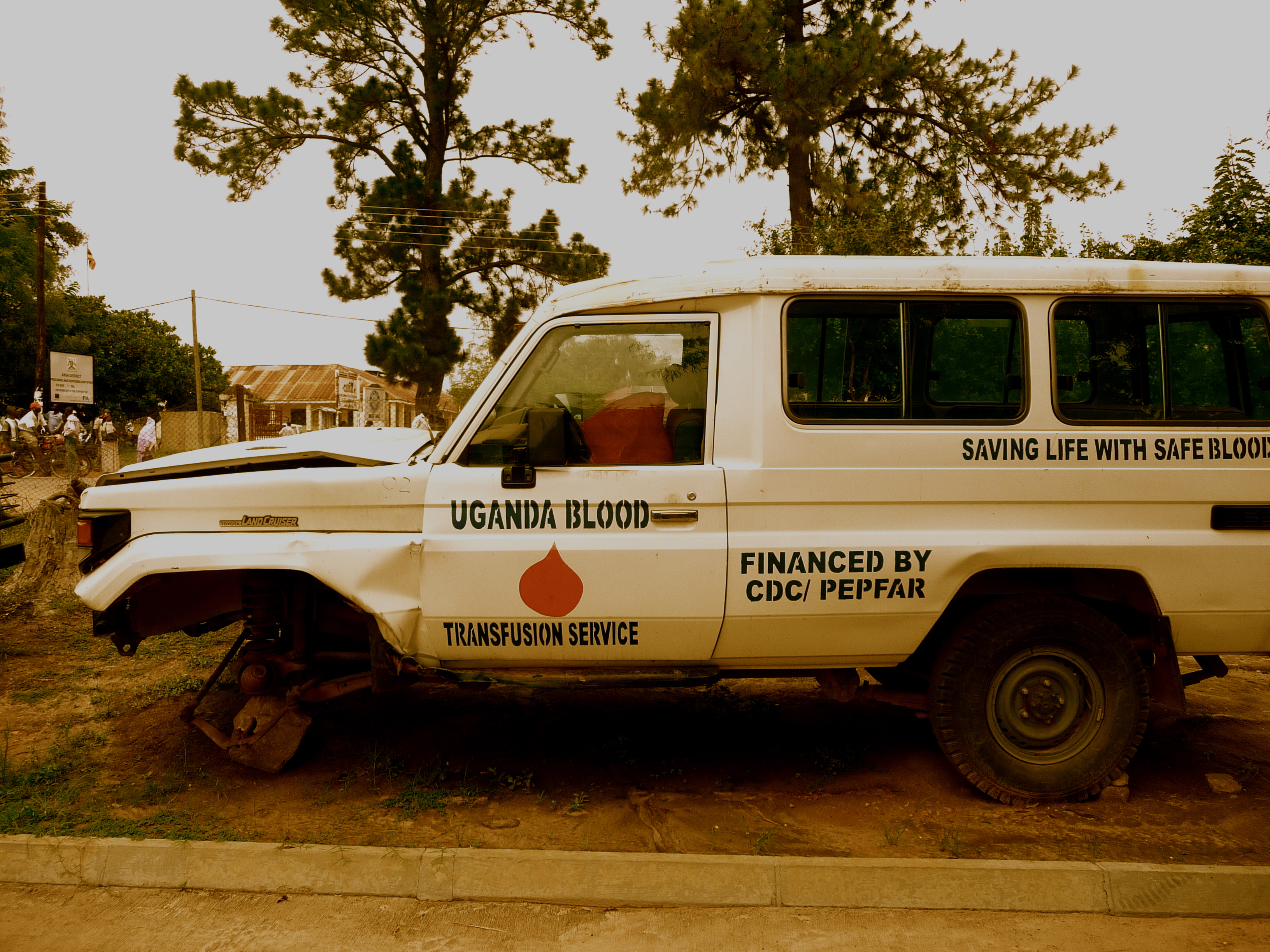
Is the AIDS industry hurting public health?

Is HIV/AIDS funding distorting health priorities in ways that actually harm efforts to improve public health? If so, how? These are questions I have wondered about for a long time. In 2008, the U.S. government spent $283 million dollars in Uganda on the HIV/AIDS sector via the President’s Emergency Plan for AIDS Relief (PEPFAR). In the same year, the Ugandan government spent approximately $180 million on the entire health sector. What impact does PEPFAR levels of donor funding for HIV/AIDS have on the recipient country’s health priorities? On the amount of money spent on other health issues? On the number of doctors that work in primary care?

Tapiwa Gomo of Newsday writes:
” … The UNAIDS projects that by 2015, the annual resource needs will reach $54-57 billion (a total of approximately $172 billion in three years) which could avert 2,6 million new infections and 1,3 million deaths. Still this is not enough to cater for the 33 million people living with the virus today.
As a result of the presence of such huge financial figures, the HIV and Aids industry has uncontrollably grown in size and budget, thanks to the generous donors who can finance anything or anyone as long as there is an HIV and Aids dimension in the proposals.
However, what concerns some experts is that the impact of this colossal and resource-guzzling industry is not parallelled by results on the ground, in addition to the damage it has caused on the public health sector especially in Third World countries...”

The article in full can be found here.

I only have speculative and anecdotal evidence pointing to negative side effects of gargantuan HIV funding, but I am currently working on a project that I hope will provide more quantitatively sound evidence. More on this as the project comes along.
copycats

Well, entirely unsurprisingly the Ugandan army has been accused of war crimes in the DRC in a recently leaked draft UN report. The foreign minister, Sam Kutesa, has suggested that the publication of such a report might “undermine” Uganda’s resolve in contributing to and participating in peacekeeping missions, most notably in Somalia. This sounds not unlike Rwanda’s recent threat to pull its peacekeeping troops, which spurred the last minute trip of Ban Ki Moon to smooth things over. Copycats! But hey, the (credible) threat seemed to work pretty well for Kigali. It doesn’t set a very good precedent for the UN though…

small victories in record keeping

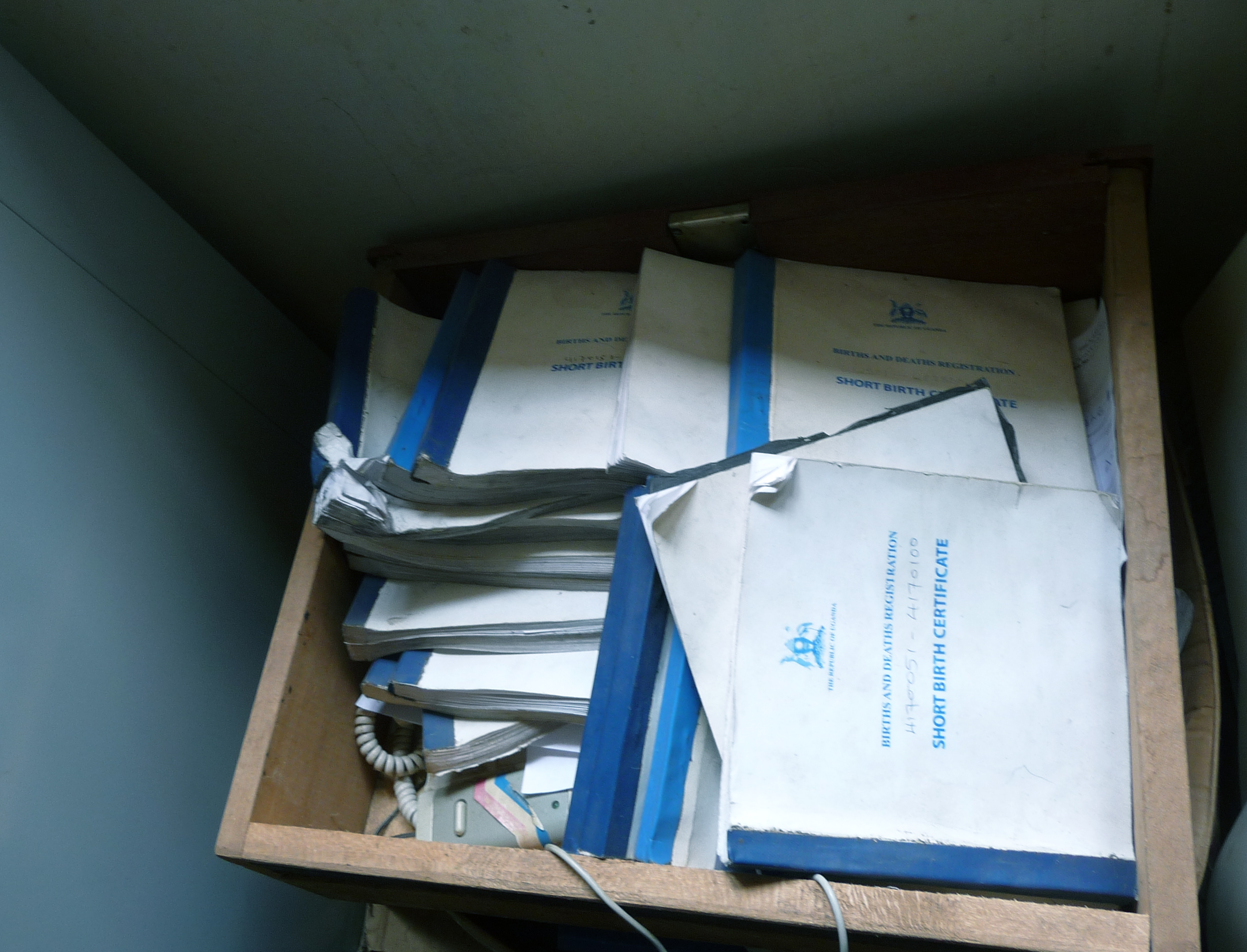
While many of my photos from the summer were lost along with the laptop, I managed to salvage a few from the camera, including this one — an effort in birth certification in Arua regional hospital. Record keeping and data collection is a major challenge in Uganda. There is no national register or systematic record keeping of births and deaths. The national census, while extremely useful, is only administered every 10 years, with the next census report due in 2012 (they always fall conveniently after an election year). The absence of data makes planning a major challenge, and probably contributes significantly to corruption. It is easy to create ghost soldiers, ghost teachers, ghost medical workers, etc., when you cannot easily prove or disprove their existence. Has anyone looked into the correlation between a country’s data collection activities/capabilities and level of corruption? I’d love some data on that.

APSA bound

I am off to DC this evening for the annual meeting of the American Political Science Association. As luck would have it, the Uganda North American Association is holding its annual conference this week/weekend as well, and in DC! Good timing for my partner in crime who is trekking across the country with me after an already epic journey across the globe. If you’re also in the area, let me know!

Sedition is no more!

Time to break out the champagne! Uganda’s archaic sedition law has finally been scrapped, in a much awaited decision made today by the Constitutional Court. This means that a number of Uganda’s journalists will have court cases and charges dropped (though many other charges still remain). Among them include those who have been charged with sedition for likening the Museveni regime to that of Ferdinand Marcos, for discussing Uganda’s role inĀ  the death of John Garang, and for discussing Uganda’s role in the July 11 Kampala bomb attacks, among many others.

The petition to the Constitutional Court on the issue was originally filed in 2005 by the Independent’s Andrew Mwenda (formerly of the Daily Monitor), who was quoted today by AFP saying of the ruling, “Today is not just a good day for journalists. It is a good day for all Ugandans.”

Amen!

campaign fever

Campaign season has already begun in Uganda for next year’s general elections, and the race is HOT. This is the first election in which the NRM will hold primaries where candidates are elected by the general public (party members anyway) instead of having NRM candidates chosen by the party leadership alone. This means the race for parliament is heating up way ahead of schedule, and the candidates are out in droves. In Arua, there are at least 15 candidates contesting for the municipality parliamentary seat.

Campaign posters in Arua, Uganda.

Democracy has no shortage of benefits, but elections have not infrequently turned violent in Uganda, Kenya, and elsewhere. The Independent asks whether elections breed violence rather than democracy. Well, at least campaign slogans are reassuring.

free and fair elections…or else?

“Uganda’s past elections have been marred by reports of fraud, intimidation, and politically motivated prosecutions of opposition candidates. If these upcoming elections follow that same pattern or worse, it will put the United States and our relationship with Kampala in a very difficult position. We might have to consider restrictions to our assistance and limiting our engagement with Uganda’s security forces.”

That is U.S. Senator Russ Feingold writing in today’s Daily Monitor. While the political process is by no means completely free or fair, and while journalists regularly report to the Orwellian titled Media Crimes Department of CID (Criminal Investigations Department), I find Mr. Feingold’s op-ed pretentious.

“Divisions and upheaval surrounding February’s elections could undermine the country’s unity and potentially its stability. It could also weaken the government’s international reputation and partnerships. Therefore, it is critical that the government take steps now to build public trust in the election process and the country’s democratic institutions. As a true friend to Uganda, [USA] should press them to take these steps and provide support as appropriate. The stakes are too high to ignore these issues.”

I think many Ugandans are quite aware of the high stakes. Living through decades of political upheaval and violence, which occasionally still rears its ugly head, leaves memories and losses that are not easily forgotten. In any case, people certainly do not need a U.S. senator to tell them how high the stakes are in their own country. Feingold’s thinly veiled threat to pull back U.S. military support of the UPDF is more likely to annoy the country’s leaders than send them running for political reforms. I do not disagree with the substantive points he raises, but his words come across as those of a parent warning his rebellious teenager that bad behavior will result in an a reduction of pocket money. And that’s annoying.

Rumors and Xenophobia

The past several days there have been countless rumors of bomb attacks, failed attacks and discoveries of unexploded suicide vests and the like. Security is very high in most upscale locations such as the Serena, Lugogo shopping center, and Garden City. It takes quite a while to get into some of these places as each car and bag is thoroughly searched (as least as of this afternoon). I don’t know how many additional people have been called on duty, but security companies must be enjoying the increased usage of their already prolific services around town. This amongst much outcry for the resignation of Uganda’s minister for security, Amama Mbabazi.

Apart from the fear of imminent explosions, my biggest concern now is the treatment of the Somali, Ethiopian and Eritrean communities in Kampala, and Uganda more generally. At least one Eritrean man was apparently badly beaten by a mob on Tuesday evening who thought he was a Somali, and the BBC’s Joshua Mmali interviewed a man on radio this morning who said he had trouble even finding bodas (motorcycle taxis, a common form of public transport) because people mistook him for a Somali. Mob justice still reigns in much of the city, and I fear for those innocent people who find themselves at the mercy of fear, anger and misinformation. Even as Ugandan authorities hunt for those responsible for Sunday’s attacks, they should also be aware of the danger in which many refugees, foreign nationals and Ugandan citizens alike now find themselves.

Meanwhile, a Rwandan opposition politician has been found dead in Rwanda.

Kampala Bomb Update

The city streets were largely deserted last night, most people seemed to take their own precautions and stay home. The Daily Monitor today published the photos of some of those whose lives came to a tragic end on Sunday night. My friend Michael Wilkerson yesterday wrote this analysis on the attacks for Foreign Policy.

Yesterday Al Shabaab claimed responsibility for the attacks, but it is not yet clear whether their claim is credible or if they are simply free-riding from the work of an as yet unknown/unidentified terrorist group. Ugandan authorities today say they found an unexploded suicide bomber vest, and have arrested a number of suspects, according to the latest BBC coverage. President Museveni has also declared a week-long period of national mourning, this just one week ahead of the AU Summit to be held in Kampala.

Great thanks to all my friends and colleagues in the local and international media who have been hard at work, day and night, since this tragedy befell the country. You are doing great work and your service is greatly appreciated across the globe.

My heart goes out to all those who have lost friends and family, may they rest in eternal peace.