Kony Stalls Again

Exactly one month after Joseph Kony failed on the signing of the final peace agreement between the Lord’s Resistance Army and the government of Uganda, he again failed to meet a delegation of mediators and leaders from northern Uganda who traveled to meet him at the Sudan-Congo border on May 10. At Kony’s request, the team was meant to explain to him how traditional justice and the special division of the High Court would function following the signing of the agreement. His supposed confusion regarding these specifics was his most recent excuse for reneging on his April 10 commitment. Anyone surprised by the delay of this most recent meeting is hopelessly naïve about the motivations driving this process or has simply not been paying attention.

In our last interview with current LRA chief negotiator, Dr. James Obita, he told The Independent that “May is the D-Day” for Kony to sign the final agreement. But as Kony continues to dawdle and delay, no one has proven willing or able to hold him accountable to his increasingly meaningless commitments. When asked about the limits of patience for dealing with Kony diplomatically, UPDF/Defence spokesman Maj. Paddy Ankunda replied, “I hope you’re not asking me for a deadline.” This is precisely the problem. There is no deadline for Kony even though it may be the critical point in time to enforce one.
Principally responsible for what was once termed “the biggest forgotten, neglected humanitarian emergency in the world,” the LRA, with its band of elusive and internationally wanted war criminals, has today devolved into a festering regional force at once coming apart at the seams while simultaneously maintaining its infamous capacity to wreak havoc on innocent civilians.

With his failure to sign the final peace agreement, Kony unsurprisingly succeeded in further drawing out the “peace process” that has done everything but ensure that everyone involved take decisive steps to bringing peace and reconstruction to the region. Yes, the war as it was known in northern Uganda for over two decades appears to have ended but in the process, a new force has been spawned.

While the LRA of old was an isolated and relatively unknown force allowed to terrorise northern Uganda – through either the lack of capacity or lack of concern of the government of Uganda – the new LRA finds itself very much in the spotlight and unable to maintain the almost mystic aura that once surrounded Kony and company. Penetration into the once isolated bubble that was the LRA force has demonstrated to both the rebels and outsiders alike that despite his spiritual claims, Kony is after all just another man. There are signs of cracks forming among LRA leadership though rumours of infighting and Kony’s slaying of underlings may sometimes be exaggerated or even complete fiction.

The death of Vincent Otti last year was one of the first such cracks. Then came the almost comically frequent change of guard of the LRA chief negotiator. Martin Ojul was whisked away and replaced by David Matsanga who fumbled and fell, paving way for the entrance of James Obita – all in a span of five months.

And the LRA itself has been playing musical chairs across the region trying to locate itself in the most secure and strategic jungle spot, while hoping the music that is this bumbling peace process won’t stop playing yet. It darts from Garamba to Ri-Kwangba to Southern Sudan to Central African Republic (CAR) and back again, leaving behind smatterings of LRA camps and attacking and abducting as they go.

And whereas abductees and lower ranking rebels once feared defection – out of punishment by either the group itself or by the communities to which they would return home – a number of events and factors have succeeded in making rebel reintegration into society a much more attractive option for would-be defectors. It is perhaps the de-mystification of the LRA, together with increasing impatience with the drawn-out peace process, which has put Kony on the defensive and led to a spate of abductions throughout the region in the past few months.

Leader of the Opposition, Prof. Ogenga Latigo, thinks the cracks in the LRA are because its myth of invincibility has been shattered and Kony is no longer perceived as “godlike.” His followers and comrades have seen him very much humanised, interacting with local leaders and government officials who treat him as just another man and not the mystic spiritual leader he was once perceived to be.
Maj. Ankunda agrees. “His followers thought he was untouchable, unreachable,” he explained, but in recent years and largely as a result of the peace process, they have seen that “he can come out, he can talk…he is human.”

Kony himself is very much aware of his mortality and vulnerability, or else he would not be so concerned for his personal security. This has been the major stumbling block throughout the peace process. With an arrest warrant hanging over his head, issued by the International Criminal Court (ICC), Kony cannot be certain that if he surrenders he will not be immediately picked up and taken to The Hague, where he will most certainly be found guilty of committing the crimes of which he is accused.
The perceived vulnerability of Kony and his rebels has implications for the behaviour of the group. More members could see defecting or surrendering as an attractive choice in the months to come, even if Kony himself does not surrender. If these defections do occur, it may mean a weakening in the cohesion of the group. Kony could react with an upswing in abductions to rebuild his strength.

A UN report recently stated that 300 to 500 abductions had occurred in the region over the past few months. How well these new abductees will be able to build military capacity for the group remains to be seen. Though certainly cause for alarm, a heterogeneous group comprised of members largely uncommitted to a cause and under the leadership of a man increasingly perceived as vulnerable and paranoid may mean a new LRA that is more unstable. This does not necessarily limit Kony’s capacity to wreak havoc, but certainly suggests a new version of the LRA, and one that is not necessarily new and improved.

The vulnerability and incentives for the defecting of lower rank LRA should be an opportunity for interested parties to deal with the rebel group once and for all. Instead, the floundering of key players has all but ensured that this opportunity will be missed. The relative peace in northern Uganda today should not be taken as evidence that the government has done everything in its power to end the LRA insurgency.

In fact, the migration of the LRA has presented a convenient opportunity to deflect responsibility for dealing with the rebel group. As Maj. Ankunda explains, “Kony is no longer our problem, he is a regional problem.” Point taken: Recent abductions have occurred practically everywhere except Uganda. Unfortunately this has created a fabulous recipe for collective action failure. Kony is now both everyone’s problem and no one’s problem.
Pressure is mounting for Kony to sign, but he may have some time left to stall. The NGO community remains characteristically and naively optimistic abut the whole process, and though MONUC has threatened to take military action against the LRA, no one seems ready to pull the trigger and sanction or support such an attack.
So as the music continues to play, the LRA continues to frolic around the region stepping on toes, but never hard enough to elicit any consequential reaction. In fact, in some cases open and profiteering arms may even welcome the would-be mercenary force. And those who lie in the wake of the cavorting LRA are also those with the least power to do anything to stop them. With no government as yet severely encumbered by LRA occupation (and with some distinctly aided), the manhunt that could wipe out a recently weakened rebel force has yet to seriously begin.

The good news is that while perhaps not under tremendous pressure to capture Kony, the government of Uganda should find it in their interest to begin development and reconstruction of the now LRA-free north. Many observers have suggested that the government of Uganda itself has been complicit in war crimes or at the very least allowed the war to continue as a way of suppressing northerners not supportive of the National Resistance Movement (NRM) regime. However, Professor Latigo suggests that with Museveni’s slipping support in what were formerly NRM strongholds (such as Baganda and parts of the west), continued isolation of the north, intentionally or not, is no longer tenable. Indeed, Museveni’s recent trip to West Nile and elsewhere in the region suggests his keen interest in gathering northern support. And increased international attention on the conflict in recent years, largely as a result of the peace process, all but ensures that the north will not remain the forgotten humanitarian crisis it once was.

Nevertheless, though the myth of the LRA has been shattered, the mystical Kony brought down to earth and signs point to the potential devolution of the LRA, there appears to be more dilly-dallying. The government of Uganda has played their hand particularly well – simultaneously relieving themselves of blame and responsibility for the whole affair. But few in the region seem especially interested in picking up the reigns.

If one were to do away with the LRA once and for all, now would be the appropriate time to do so. It remains to be seen whether involved parties will take advantage of this window of opportunity, or instead dither and dawdle pushing around responsibility until Kony becomes the regional warlord he still has the potential to become.
Journalists arrested, Independent offices raided

PresOur offices at The Independent in Kamwokya, Kampala were again raided yesterday, and this time three journalists arrested — Andrew Mwenda, Charles Bichachi, and John Njoroge. Andrew was literally kidnapped as he was leaving his house — surrounded by five security operative vehicles, removed at gunpoint from his car, and handcuffed. All three were taken to police headquarters in Kibuli, Kampala and held for several hours. Meanwhile The Independent offices were raided and searched by a number of security operatives, and all phones of staff members were confiscated. Three computers were taken, as were flash drives and other documents suspected as “seditious” material. Andrew and the others have been charged with sedition and defamation, as a result of publishing two articles, one on Maj. Gen. Kazini and one on torture in Uganda as told by a former UPDF soldier. The following are national and international accounts of the event:

Daily Monitor

BBC

Reuters

Life after m7: No energy to generate energy

The following is a feature published in the Daily Monitor April 25, 2008, by Angelo Izama, a great friend and brilliant journalist and analyst.

Angelo Izama

Visitors to Uganda who fly into Entebbe International Airport at night are often struck by how dark the place is.
Night flights these days also show something else; the bright lights of the Chinese-rebuilt residence of the President which stands out in contrast to the kerosene powered homes around it.
Darkness could be amusing for tourists on their first trip to Africa who fantasize about elephants leaping out of roadsides and whose only introduction to Uganda are paperback digests ( mostly written by former tourists or resident ones) that fail to inform the thrill seekers that Idi Amin is no longer President here.
However the lack of electricity to light streets, homes and businesses is not a funny joke propped up as a tourist accessory. For its 31 million people Uganda generates and uses less electricity than a small division of Hyundai industries, just one of the many big enterprises in a country with which Uganda was at par a short forty years ago.
Since the use of electricity is an important measure of how economies are performing Uganda’s case has been one of stagnation and regression.
Whenever critics of the government single out the power sector for bludgeoning the government at pulpits and radio studios, they are told to be optimistic because Uganda has made a “recovery” from a politically darker past when Amin was actually an Entebbe resident himself.
“You cannot always be pessimistic” said Energy Minister Daudi Migereko in a phone interview on Monday about the state of the energy sector. But even he admits the present situation is trying on the patience of the discipleship or cadres who are the foot soldiers of the revolution started by Yoweri Museveni.
Uganda has registered negative growth in the energy sector. Electricity production today is lower than at independence 45 years ago and much lower in the last half decade when a series of unpunished blunders turned load shedding into a way of life.
But a far more serious problem facing the country is not its candlelight economy: It is the affliction of low expectations and even lower standards that have made mediocre performance acceptable particularly within the government. Even if the administration wanted it simply does not have the energy to take the country to another energy production level.
It must be noted that the back peddling in the energy sector is occurring in a period dominated by what many Ugandans, their neighbors and the world community consider the most progressive government in the country’s history. The World Bank, which according to Migereko (and his predecessor Syda Bbumba) has been a lousy partner, has been selling Uganda and its reform process one of the brightest spots in Africa.
However progress tended to be measured in terms of a stable currency, stable government and tons of paper reforms. Uganda remains one of the biggest missed opportunities in Africa and the energy sector is a microcosm of this colossal squander. According to Engineer Hilary Onek, a leading authority on hydro-power dams, the country’s potential is in the region of 28,000 megawatts of electricity. The distance between the 120 megawatts being produced today and that potential is what a new government would have to cover.
Add to this are commercially viable oil deposits which could theoretically power the country, with its young and enterprising population into a truly great industrial nation. There is also talk of exploiting uranium for power generation, but this is viewed by some as an alarming prospect to allow a country that cannot not even keep inventory of military arsenal to handle radio-active material.
The crisis of Uganda has therefore been the inability of its managers to reel in progress and it is on the change in management and not the conditions that progress will ultimately depend. Ironically the hamstring on progress has come on the back of too much politics and too little government.
The Museveni government reaped where it sowed. Both human and material resources in the hands of the state have been disproportionally allocated to regime maintenance and if progress were to be measured by longevity in power then NRM and Museveni have been extremely successful.
The energy sector has been a victim of this politically purposed state which has prioritised spending on defence and political projects. The reality is that lack of electricity itself does not affect the stability of the state or Mr. Museveni’s ability to stay on for 20 more years if he so wished.
Only 6% of the country is connected to the national grid – not enough to turn the lack of energy into an electoral issue but more of a middleclass nuisance. Uganda’s rural electrification program has been an expensive joke, sucking in as much money as would build another dam on the River Nile.
Logic would have it in fact that rural progress is ultimately a political risk for states with weakening legitimacy like that of Yoweri Museveni whose electoral margins have been dropping by 10% in the last three elections. Peasant to commercial farmer transitions, which require increased electricity for semi-processed value addition, come with consolidated demands for better and more reliable services from the state which ultimately translates into political pressure.
Weak state structures in a fluid political system easily buckle under this kind of pressure.
The question then arises whether or not the current administration with its huge political wage bill which has been the price of stability will be able to mobilise future legitimacy on economic progress which would require re-awakening the economy with its potentially volatile political stakeholders without serious risks to regime stability.
The answer is no. Only a new administration will have the political capital to recalibrate the purpose within the state from one in which political stability is not an end in itself but simply a requirement for economic and social progress. Current energy projects can therefore not succeed in unlocking their own potential or the wider gains of reliable electricity for a country starved of it.
Framers of Uganda’s soon to be launched National Industrial Policy have emptily written that the “political leadership in Uganda is unequivocally committed to industrialisation, economic transformation, modernisation, and diversification” on one hand and then go right ahead in the next section to say that “electricity [is] judged to be the most severe impediment.”
The somewhat muddled policy paper has all the fluff that accompanies a dreamy government document but is a good example of how Uganda is running on optimism and little else.
In the energy sector these good intentions have been extended to sheer fantasy.
Uganda has drafted a nuclear energy bill even if just a quarter of a million Ugandans have a power connection compared to over 3 million who carry cellular phones and can therefore afford electricity connection if only they had access. The nuclear generated electricity would be transmitted by wireless, perhaps? The demand is there but without mobilising it through a grid, it remains a dream.
According to Migereko the strategy of the country is to generate enough electricity from the various hydro, thermal and biofuel projects so that supply is forever ahead of demand but the truth is that government today subsidises power consumption in billions of shillings every year- in effect sustaining demand by paying for it.
So what is this talk of 11% growth in demand? Clearly demand itself must be mobilised. Official figures in “Discover Uganda” a public relations document produced for the Commonwealth Summit last year puts Uganda’s labor force at 13 million. It is anyone’s guess what percentage of the able and willing do work in an environment where there is at least one light bulb.
One of the biggest scandals in Uganda is not the corruption or impunity of state-based actors but underemployment of those able and willing and skilled which like the country’s vast energy potential remains locked up and chained to the vagaries of leadership in government.
Most Ugandans may have only heard of the National Oil and Gas Policy which is the framework for managing the exciting prospect of oil in the Albertine graben (western Uganda). Again the policy itself has been excellently written but the potential problems in the sector [which have all to do with the politics of oil in Uganda] are telling of what is to come.
Some of these problems are immediate. According to the government it will build a mini-refinery by Christmas next year. Such aggressive timelines have dominated the rhetoric of President Museveni and in the energy sector embarrassingly so. The Oil and Gas Policy requires setting up of a national petroleum company and a regulatory agency first. This is unlikely to be accomplished properly in the next 18 months.
The proposed refinery according to Migereko will “happen” on time but judging from the speed with which procurement of badly needed thermal energy has taken (an average of 3 years for heavy fuel generators which are yet to be set up) there is very little hope here except for the uniquely optimistic.
The Minister admits that the capital intensive sector he is heading attracts the corrupt like hyenas to a deer feast – one of the major headaches for any Ministry – but truth be told, a serious government or one desperate to succeed would not be stopped by rent seekers who are everywhere in the world.
Instead corruption-inspired load shedding has become a Ugandan way of life. One of the biggest heists in Ugandan history will be the fake dam extension project at the Owen Falls Dam for which reliable information suggests Ugandan officials from the Ministry simply (hopefully inadvertently) acted to avail more water from Lake Victoria to downstream countries.
The dam extension known as Nalubaale has been draining the water from lake leading to a drop in levels but despite all the blabber about fighting corruption, no investigation was instituted and the Minister in charge at the time (Syda Bhumba) was sent to the Labor and Gender Ministry instead.
This scandal is a low even for the notoriously corrupt Ugandan government described by peer reviewers at the World Bank as a government of “Ali Baba and the Forty Thieves.”
When a new President sits at Mr. Museveni’s desk his biggest challenge will be to inspire genuine change, something Mr. Museveni has been talking about for 21 years.
aizama@monitor.co.ug

Education in Uganda: The Cost of Collective Action Failure

It is hard to say whether there are more questions or more accusations flying around the country in the weeks since the fire that broke out at Budo Junior School, killing 20 young girls. No one wants to take responsibility and everyone has a different idea of whom to blame. The Ministry of Education points at the local government, local government at school administrators, school administrators at guards and matrons, and the president at all of the above and everyone else in between.

Blame for the Budo incident and the consensus that someone must pay for it has resulted in the prosecution and jailing of some Budo staff. Few, however, have questioned the role of parents and the general public in this and, more generally, the deterioration of the educational system as a whole. The assumption is that parents take actions they perceive to be in the best interest of their children. It may be argued that parents brought their children to board at Budo, for example, because they perceived this school to be the best attainable learning environment for their children.

Many were likely aware of the overcrowding but nevertheless trusted that their children would be in safe hands. A letter written by a parent a few months ago demonstrates this awareness. It was circulated around Ugandan media houses in early February and published in The Daily Monitor, complaining of “buildings being run down, pupils being fed poor and late meals…[and] tap water being available only during the day when parents visit school.” Thus, though concerned parents had evidently been making noise about poor conditions, it was not until disaster struck that all of those involved began to take concerted and expedient action to solve some of the most critical problems. But given the fact that this is not the first, second, or even tenth school fire to occur in the past several years, what reason is there to expect that action will be taken outside of Budo to improve conditions in schools?

A primary issue, not just in education but also in nearly all public service sectors, is the lack of collective action. It is easier for parents to take care of the immediate needs of their individual children – for example, bribing teachers to give their children special attention or extra lessons – than to work collectively to demand that services be improved for the good of all the children. Likewise, it is easier for those with clout to buy a Land Cruiser rather than to demand that roads be constructed for which one does not need a 4-wheel drive simply to navigate potholed city streets. And it is easier to send a family member to South Africa for treatment than to revamp Uganda’s ailing healthcare system. Yet opting to act individualistically in matters regarding public services can actually backfire – catastrophically in the short term or incrementally in the long term.

This is not in any way to suggest that parents are to blame for the deaths of their children. It is merely to show the level to which the collective action of all those concerned has failed with disastrous consequences. This collective includes not only parents, but the larger society that should have a vested interest in ensuring its children are safe, healthy and receiving quality education. It is not news to anyone that public services in Uganda such as education, roadwork and healthcare are in shambles. What is less clear, however, is why in so many cases the collective whole has allowed these systems to flounder and fail.

There is a danger that lies in a myopic investigation of the Budo fire and other incidents symptomatic of wider structural failure. Focusing on the prosecution of individuals and on the details surrounding the Budo fire is ultimately obstructing the larger picture – that the educational system in Uganda has degenerated quite literally into a powder keg threatening both children’s lives and opportunities. The endemic and monumental problems facing education in Uganda require both a vision and collective action.

The educational system is flush with cash when compared to other sectors, receiving around Shs 767 billion in 2007/8 – 16% of the total budget and significantly more than any other sector. Yet in lieu of a vision for what education should provide, the focus of policy appears to be increasing the percentage of children that can fit in a classroom and be passed along from one grade level to the next. Around 7 million children are estimated to be enrolled in Uganda’s primary schools, and this number is expected to increase in the next few years to meet the target of 95% primary enrolment, up from 91.2% currently. High rates of enrolment in P1, though a seeming positive achievement, may distract the public, government and donors from serious structural and substantive issues facing primary education. Aside from the oft quoted statistics on low rates of primary school completion – for example that only 22% of students who began P1 in 1997 reached P6 by 2002 – there are quality and safety standards which are often breached in the few cases where such standards exist at all. Literacy rates have remained stagnant for the past few years, and in 2003 only 20% of P6 students were achieving minimum literacy or numeracy rates.

In addition to quality concerns, a commercialisation of education has resulted in an attempt by schools to pack as many students as possible within their walls, regardless of their capacity to manage and teach these children. Mr James Collins Dombo, Under Secretary of the Public Service Commission and parent of a Budo Junior pupil expressed concern regarding such commercialisation, explaining the perception of some school staff that “the bigger the numbers [of pupils] the more you earn.” And indeed, when asked about the condition of Budo Junior School, one teacher interviewed by The Independent mentioned the first “positive development” at Budo to be the ever increasing number of pupils.

Quality of content is also an issue. A premium is placed on memorising information from textbooks and churning out high scores on tests, without a critical examination of what this crammed information will provide. Since passing these tests is a prerequisite for continued study, however, parents will pay a high price to ensure their children are prepared to perform well by this measure, even if it is at the expense of ensuring quality in other areas, such as the conditions in which these children must live and study. Parents at Budo Junior, for example, pay approximately Shs 400,000 per term per child, and there are over 1300 students in attendance. Nevertheless, there had been no electricity in the school for several days leading up to the fire, children were sleeping in triple-decker beds, and Budo teachers had recently gone on strike after failing to receive their pay cheques. If Budo, one of the “best” primary schools in the country is facing such blatant administrative, financial or managerial problems, what must be the condition of primary schools elsewhere in Uganda?

Serious challenges thus face the primary education system in terms of vision and capacity. But before it has even resolved these critical issues, the government is again off and running with a new campaign, this time for Universal Secondary Education (USE). Though an admirable idea, it is hard to see how USE will not further distract those involved in the educational system from the many problems that already exist. The Ministry of Education, local governments, and schools themselves have repeatedly demonstrated their inability to effectively manage the burgeoning population of primary students – how will they possibly manage a growing population of secondary students as well?

Organisation and management within the sector will have to be addressed. In fact, the disorder within the educational system as a whole is largely responsible for the circular finger pointing that took place at Budo after the fire. Possibly because of the existence of so many institutions and people charged with various responsibilities within the educational sector, each assumes that a lapse in their contribution will not make a meaningful difference. It is perhaps when everyone – central government, local government, school administrators, school staff, parents, etc – is depending on someone else to run the show that the whole system falls to pieces.

For example, on his visit to Budo following the fire, President Museveni called upon the Ministry of Education and minister herself to carry out quality control measures saying, “You [Ms Bitamazire] are the quality controller and you should set the standards.” Yet at a press briefing two weeks ago Ms Bitamazire deflected responsibility, instead stating that as a result of decentralisation in 1997, the local governments and not the Ministry of Education had a “100% mandate to run primary schools.” Ministry officials admitted that there had been a weakening of inspection as a result of decentralisation and rather audaciously requested “stakeholders” help to make sure they enforce the law.

There was no specific mention of who these stakeholders are, but in any case, the principle stakeholders should be the Ugandan people and parents in particular. Granted, the ministry officials should not require stakeholders to breathe down their necks in order to ensure that the laws protecting children are enforced. Nevertheless, this is the state of affairs with which the country is faced.

The minister of education recently tried to assuage concerns regarding school safety by announcing a new education bill creating a “Directorate of Inspectorate,” which would be allocated a starting sum of Shs 2.5 billion. But the creation of even more oversight bodies will not solve the fundamental problems that exist. It may even further dilute the responsibilities that already existing institutions and officials have, creating even more opportunities for free riding within the educational sector. It will take not more institutions working separately, but collective action that will improve education in Uganda. One must hope that the Budo tragedy will not end with the punishment of a few underpaid school staff, but rather will lead to a realisation that acting individualistically within the current system is in the best interest of neither the children nor the society, both of whom have already paid too high a price for systemic failure in education.

Who is responsible for these children’s deaths?

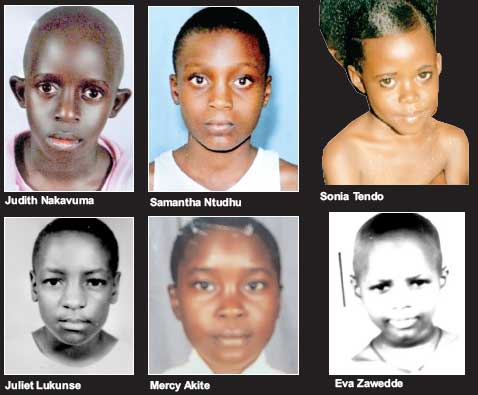
A fire in a dormitory at Budo Junior School in Wakiso, Uganda, claimed the lives of 18 children and 2 adults on Monday night, April 14, 2008. Much confusion still surrounds the cause of the fire, though there have been claims that it was the result of arson. The doors to the dormitory had reportedly been locked from the outside, trapping the children inside the burning building.

Sadly, this is just one of the many school fires that has broken out in Uganda in the past several years, although it is possibly the most costly in terms of loss of human life. The Daily Monitor reported that 33 fires have occurred in schools since 2003, and schools seem ill-prepared for such emergency situations. Did Budo have an emergency plan in case of fire or other disaster? If so, why did it fail? Why did it take fire fighters 90 minutes to arrive on the scene?

Why do disasters like this happen over and over again? Fires, collapsing buildings, major road accidents — everyone seems to shake their heads in sadness, splashing the papers with graphic images for a few days, and then little or nothing is done to prevent future tragedies from striking.

My editor at The Independent has a child who attends Budo. She lived in the now-burnt dormitory two years ago. I am so thankful her life was spared, but grieve for the children who were not lucky enough to escape. I know their families will remember and miss them always, but I hope the country will also not forget them and demand the protection their children deserve.

Patience Namukoye ———- P4C
Yvonne Namaganda ———- P5C
Tendo Sonia ———- P4E
Evlyne Zawedde ———- P4C
Patricia Namuyanja ———- P4W
Juliet Nambalirwa ———- P4E
Sylvia Nakandi ———- P4E
Juliet Lunkuse ———- P4W
Samantha Ntudhu ———- P4C
Judith Nakavuma ———- P4W
Latifa Namuleme ———- P4W
Joan Nabbosa ———- P4W
Faith Asiimwe ———- P4C
Elina Nalwoga ———- P4W
Patricia Nakkazi ———- P4
Mercy Akite ———- P4E
Barbara Natungonza ———- P4
Mariam N. Nakato ———- P5

As reported in The Daily Monitor: http://www.monitor.co.ug/artman/publish/news/Tragedy_at_Budo.shtml

Collapsed Juba Peace Talks: Who is Responsible?

April 10 marked yet another impasse in the protracted posturing formally known as the Juba Peace Process. Kony balked, Matsanga split, and much of the delegation that had traipsed to Ri-Kwangba to witness the signing of the final agreement of the process returned home disappointed but unsurprised.
In fact, the absence of key participants on the day of the scheduled signing, including Norbert Mao, Walter Ochora, and Joaquim Chissano, could have been a hint that those in the know did not really expect Joseph Kony, leader of the Lords Resistance Army (LRA), to come through. But does Kony’s failure to sign this final agreement mean that the peace process is over?
The patience of many is wearing thin with the incessant foot-dragging and flimsy excuses. A return to violence has always been an option for both the LRA and the government of Uganda, but is this the desirable or most attractive outcome for either? At this point the parties appear content with the status quo, suggesting that the process may drag on until outside pressure builds.
Over US $10 million has been spent to date on the “peace process” between Kony and the government of Uganda. Kony’s apparent distance from the peace process as a whole could suggest a lack of commitment, fear for his personal security, or both. The long life of the process and its failure to result in any meaningful commitments by any party begs the question of not only what those involved stand to gain from its resolution, but also how they benefit from its continual delay. It may not actually be in the benefit of Kony to conclude the process that has provided both money and a cessation of hostilities with the government of Uganda.
Those involved include not only the obvious parties, namely Joseph Kony and the government of Uganda, but all of those involved in this multimillion dollar endeavour – from mediators to negotiators to leaders in northern Uganda. There are political, security and financial interests at stake for all in this process. The major stumbling block would appear to be Kony himself, who has remained virtually perpetually elusive, but evidence may cast doubt on the commitment to peace of other key players.
Former LRA chief negotiator Martin Ojul and several others were fired by Kony, allegedly for using the peace talks for personal financial gain. All members of the LRA delegation reportedly received US $150 (approximately Shs 250,000) for their work daily, an indication of just how lucrative involvement in the process can be. Just last week Ojul’s replacement, David Nyekorach-Matsanga, was also sacked by Kony and reportedly arrested in Juba with $20,000 in cash. On March 21 The Independent quoted sources saying Matsanga was squeezing money out of the peace process. Matsanga’s apparent lack of communication with Kony also casts doubt on how committed both men were to seeing the peace processes quickly concluded.

Is it Kony or Matsanga to blame?

The questionable motivation of negotiators notwithstanding, it is Kony who would appear primarily responsible for causing the most recent setbacks. After delaying the signing for a supposed outbreak of gastrointestinal trouble, Kony’s most recent excuse for postponing was technical. Observers say he claimed he did not know what was written in the final agreement, and therefore requested that Acholi paramount chief Rwot Achana and religious leaders come and explain it to him. He specifically wanted clarification on mato oput and the special division of the High Court that would handle LRA cases.
If his claims are true, why is it that Matsanga did not discuss the details of the agreement with him?
But is it likely, as he claims that Kony had not seen the agreement? Onyango-Obbo is doubtful that this is the case. “In many ways he is like Museveni,” he explained, “They are control freaks,” and therefore it is highly unlikely that Kony was unaware of what was going on or what was written in the agreement. What is more likely is that there is something Kony wants from the agreement that he has not yet gotten. One can speculate as to whether this is monetary compensation, security assurances in the form of third country exile, or something else entirely.
In interviews following his sacking, Matsanga said Kony had instructed him to tell lies on his behalf. Was Matsanga telling the truth? It is difficult to be certain – of all the things he is known for, honesty is the least of them. After Matsanga met Kony in Ri-Kwangba on April 10, Kony reportedly kicked him out of his role as chief negotiator, ordering several of the rebels to escort him out of the LRA camp. Following his dismissal, he told the Daily Monitor, “I am tired of telling Kony’s lies to the world. I am very sorry I lied to all of you when I was asking for extensions for four times. Kony called me four days ago and told me to bring his sister, his uncle, and his wife but when I took them to his base in Garamba, he was not there.” But Martin Ojul has told The Independent in a recent interview that at least up until the end of March, Matsanga had never met Kony in person.
As The Independent has reported before, the history of his relationship with the LRA also casts doubt on how closely Matsanga would have worked with Kony on the negotiations. He had resigned as LRA spokesperson in 1998 and was interrogated by American intelligence services, reportedly telling all he knew about the LRA. Matsanga was known as a skilled debater and would have been a masterful negotiator, but some suggest that Kony never trusted him. Charles Onyango-Obbo, journalist and renowned commentator, described Matsanga, whom he knew personally in high school, as “ambitious in his own life,” but went on to say he thought “Matsanga would not be the kind of person Kony would trust.”
In any case, whatever Matsanga’s prior intentions, he is now, for all intents and purposes, out of the picture. Long-time chief mediator and Vice President of South Sudan, Riek Machar, now remains at centre stage. Though sources say Machar had not talked to Kony since December, contact between the two men resumed immediately preceding Matsanga’s dismissal. He now stands as the primary link to Kony. Despite his role as mediator, however, he may not be an entirely neutral figure. Some suggest he has hopes to lead an independent South Sudan in the near future. Kony and company could be potentially useful allies to have in this endeavour. Will he be able to deliver Kony to future peace talks? Is it in Machar’s interest to see the peace agreement signed?
It is unclear what the signing would mean for those involved. Kony has said that he will not disarm or come out of the bush until the arrest warrants for him and other top LRA officials, issued by the International Criminal Court (ICC), are revoked. The question of the warrants has become a sticking point between the government of Uganda and the ICC. Museveni has suggested that if the peace agreement is signed he will not send those with warrants to The Hague but instead use Ugandan courts and traditional systems of justice to resolve the matter.
State minister for Foreign Affairs, Okello Oryem has explained, “The traditional justice is in line with the ICC statute which emphasizes addressing justice and impunity. This is what we are going to do under mato oput and there is nothing irregular.” This explanation sidesteps the issue however. Uganda signed and ratified the Rome Statute of the International Criminal Court, which requires that states parties “comply with requests for arrest and surrender,” regardless of who referred the case to the Court.

Is ICC stumbling block or Uganda govt?

What is the position of the ICC in this case? Maria Kamara, Field Public Information and Outreach Coordinator for the ICC in Uganda, spoke on radio April 12 saying, “The matter came to the court through a legal process and it can only get out of the Court through that same legal process…if the government of Uganda or the LRA are seeking a withdrawal [of arrest warrants] they have to challenge this through the legal process.”
According to Article 57 of the Rome Statute, the Pre-Trial Chamber of the ICC may, “Where a warrant of arrest of a summons has been issued… seek the cooperation of States…to take protective measure for the purposes of forfeiture, in particular for the ultimate benefit of victims”. This suggests that the Court could conceivably withdraw the warrants, but this power lies with the Pre-Trial chamber, not with the government of Uganda. Ms Kamara also noted that the judges of the Court have asked whether the courts of Uganda have the capacity to try those accused according to the provisions stipulated by the Court. “I don’t know how far the government has gone in responding to the questions put before them by the Court,” she said.
Though Kamara claims the ICC and the government of Uganda have “good working relationships” and that “the government of Uganda has cooperated with the Court so far,” the extent to which the government will carry out the mandate of the Court with regard to the warrants is unclear. Kony clearly feels threatened by the warrants and his failure to sign the final agreement last week may be a sign that he feels his security needs have not yet been fully addressed. His stated reservations seemed to hinge on how justice would function in the absence of the ICC, namely through mato oput and the special division of the High Court.
The fact that Kony has not come out of the bush and did not sign the agreement on the arranged date indicates that he is not satisfied with the agreement as it stands, but what has the government of Uganda gotten out of the peace process? What strategic value was there in participating in these talks?
It is true that since the talks began in 2006 significant changes have been taking place in northern Uganda. While a return to war is not yet out of the question, observers note that the war in the north as it was known now appears to be effectively over. Minister for Internal Affairs, Ruhakana Rugunda told The Independent, “The peace process has accomplished what it has set out for. It has consolidated the peace and security that has been brought there by the UPDF. The peace and security in northern Uganda has reached irreversible positions – the people of northern Uganda and the UPDF and the whole country will not allow the insecurity of the past to come back – they will work together.”
A phase of the LRA insurgency may indeed be over, meaning peace for northern Uganda, but the LRA still remains a regional player that may be strategically beneficial to a number of parties who are now competing for its services as an effectively mercenary army. Some analysts have charged that the government of Uganda effectively permitted the war in the north to continue as a means of oppressing northerners who were a potential threat to Museveni’s power. Whether or not this was the case, increased international attention on the conflict in recent years made it politically injurious in the global arena for Museveni not to make a more concerted effort to bring peace to the north of the country.
Despite and perhaps because of the fact that Kony did not sign the agreement, the government of Uganda may be widely perceived to have the moral upper hand, which was once in question. By participating in the talks, regardless of Kony’s involvement or lack thereof, it appears as though the government is committed to peace in northern Uganda. They have largely appeased those who claimed they were neglecting or not adequately addressing massive human rights abuses and have essentially shoved the LRA out of Uganda and into the surrounding countries.
The government of Uganda may now have little interest in further cooperation with the ICC. The Court by itself has little power and depends on its signatories to enforce its mandate. If Uganda does not cooperate in apprehending Kony et al, it is unlikely the Democratic Republic of the Congo or Central African Republic, also signatories, will be successful in capturing them either. Sudan, for its part, would have little interest in dismantling such a useful mercenary army even if it were a signatory. The United States, perhaps the best equipped to do the job in terms of intelligence and military strength, has also unsurprisingly refused to sign the Rome Statute and is not beholden to its mandate.
Kony’s failure to sign the final agreement must therefore be seen in the context of multiple and conflicting interests at play. Peace processes are rarely concluded swiftly, much less so when so many actors have so much at stake. The process is not really confined to the maintenance of peace in northern Uganda, as arranged between the LRA and the government of Uganda. On a broader scale, it is a reorganisation of alliances and consolidation of interests across the entire region.
It is no surprise, then that this “peace” process will take even more time and deliberation, particularly if those involved stand to lose more by concluding rather than prolonging it. A return to violence is the logical outcome of a complete collapse of the process. This may be avoided, however, with a careful reconstruction of alliances that determine what role the LRA will play or not as a regional force.

Melina Platas
The Independent

Is Industrialisation being taken seriously in Uganda?

The library of the Ministry of Tourism, Trade and Industry (MTTI) is hot, and the paltry breeze wafting in from its windows is hardly relief for anyone who has just climbed the six flights of stairs to browse its dusty shelves. On these shelves, if you ever make it to this corner of the ministry, you will find thousands of documents, policies, manuscripts, and reports, which, after the hundreds of thousands of work hours put into creating them, now sit idly collecting dust and are often all but forgotten. One document has not yet made its journey to these shelves. It is hot off the press and fresh in the minds of its creators and President Museveni himself.
“The National Industrialisation Policy: A Framework for Uganda’s Transformation, Competitiveness and Prosperity” is the latest in a string of industrialisation policy plans for the country, and was recently approved by Parliament. Is it, like so many others, destined to end its short life in the policy document morgue that is the ministry library? Or will it play a more central role in the making of the future of Uganda? “Transformation of Uganda’s economy is one of the fundamental goals and commitment of the National Resistance Movement Government,” writes President Yoweri Museveni in the policy’s forward. “Uganda’s economic transformation will critically hinge upon industrialisation, and the application of Science, Technology, and Innovation, as the main driver and prime agent.” But what kind transformation is really being envisaged here? And what evidence is there that the NRM is committed to this transformation, whatever it may be?
A transformation involves both a starting and ending point. The starting point is Uganda’s economy as it stands today. Uganda’s economic growth performance is generally strong, with an average growth rate around 6 percent for the past 20 years. But the population has also been growing at a rate of between 3 and 4 percent, meaning that GDP per capita is not increasing as fast as overall GDP growth. Uganda’s labour force was 10.9 million in 2005/6 and is projected to be around 12 million today. Approximately 65 percent of this force works in agriculture, 25 percent in manufacturing, and 10 percent in industry. Contribution of industry to GDP increased slightly from 2001/2 to 2005/6 from 18.9 percent to 20.5 percent, but the contribution of industry to GDP growth rate actually declined from 2.1 percent to 0.9 percent between 2004/5 and 2005/6.
Though agriculture has long contributed the most to Uganda’s GDP, as a percentage of GDP it has been decreasing for the past few years. However, 88 percent of the population resides rurally, the majority of whom engage in some form of agriculture. Moreover, these agriculturally based rural populations have a much higher population growth rate than urban populations. In rural populations, women in Uganda have an average of 7.1 children, while in urban populations the average is 4.4 children per woman, according to the 2006 Demographic and Health Survey. What will this rapidly growing and primarily rural population mean for the economy?

Although the industrialisation policy sets a goal of 25 percent of total GDP to come from manufactured products within 10 years, it does not address how the millions of children who will enter the labour force during that time will be able to meaningfully contribute to that goal. What kind of education will they have access to and what skills will they have acquired? Nearly 25 percent of Uganda’s population is currently in primary school – how will they be not just surviving, but actively contributing to the country’s industrial development? None of this is clear from the policy. Agro-processing will be a principle focus of the policy, but what impact will the growing population have on the country’s ability to export agricultural products that its citizens also need to survive?

Other target indicator goals by the tenth year of policy implementation include a 30 percent contribution of manufactured exports to total exports and 30 percent value added in industry as a percentage of GDP. Along with these come a long list of policy actions – everything from infrastructure development to skills and human resource development to gender balanced and sensitive industrial transformation. But amidst all the ideas, it becomes easy to lose focus and “prioritisation” ceases to retain meaning. For all the policy rhetoric, what evidence is there of commitment to industrialisation, as it has been defined by certain target indicators, which may or may not be adequate or attainable?

The policy itself notes that “Government is yet to invest adequately in Industry and Technology and meet the AU set target of allocating at least 1% of GDP to this sector.” Granted, foreign investors will be critical to the so-called economic transformation of the country, but the government will likely need to take a more active role as well and not rely solely on foreign direct investment. The Ministry for Tourism, Trade and Industry, chiefly responsible for coordinating the industrialisation effort, receives a budget of less than Shs 40 billion, even including donor assistance. This, when compared to the budget for Defense for example, over Shs 400 billion, is simply laughable. Collaboration with better financed ministries like that of Works and Energy, with budgets of around Shs 570 billion and Shs 330 billion respectively, will help, but it does not excuse the fact that MTTI works on a budget similar to that of the Office of the President.
Heartening, however, is Uganda’s recent Export Performance Analysis, which indicates increasing investment in the re-export sector and increasing industrial output. Formal merchandise exports in the country grew by 39 percent in 2007, from US$962 million to $1.34 billion. The largest share of total exports, 39 percent, went to COMESA. Trading with COMESA grew 78.9 percent between 2006 and 2007, from US$283 million to $500 million. This suggests that so-called economic transformation may lie in further developing regional trade, a point which is noted though not particularly emphasized in this most recent industrialisation policy.
Uganda’s economic success, especially when compared to the rest of sub-Saharan Africa, is impressive, but it does not in and of itself indicate a commitment to industrialisation on the part of the government. Neither does the production of this latest industrial policy. As it stands there is not yet a comprehensive implementation guide and it is hard to see how MTTI, with its scant budget, will be able to effectively implement the policy even with a guide. Economic growth is likely to continue with or without this industrialisation policy document. The real question is not whether these pieces of paper will sit collecting dust in a few years time, but how the country will address the issues that may ultimately threaten continued economic growth like food security, population growth, and an increasingly competitive market.

Melina Platas
The Independent

Elections get dicey for African Strongmen

Two weeks after elections were held in Zimbabwe, the South African Development Community (SADC) held an all-night meeting to discuss the country’s uncertain political future. Among the chief concerns were the timing of the release of the election results and the acceptance of the outcome of these results. It is still not clear why the results have been held or what the outcome will be. But how and when did elections come to play such a vital role in African politics? What benefit, after all, do they provide to the power-hungry incumbent?

Though it is not at all surprising that Mugabe has lost support over the years, what is quite surprising is that elections were held at all. It is not hard for even a national hero to lose friends when wheelbarrows of money would not buy bread even if there were bread to be bought – but then why would this man subject himself to a popular vote given apparently widespread discontent? In recent years we have become so accustomed to the regular holding of elections (rigged though they may be) that it is easy to forget that a decision was made to hold them in the first place, and that that decision had potentially costly outcomes. No one is calling Zimbabwe a democracy for holding elections, but neither is it an entirely authoritarian state. It is what some have termed a “hybrid regime,” or more specifically, a “competitive autocracy.” Zimbabwe is just one of the many such hybrid regimes somewhere on the continuum between democracy and autocracy.

For leaders like Mugabe, who does not appear particularly keen to pass on the torch, the question is why he has chosen to adopt certain characteristically democratic institutions that actually pose a significant threat to his hold on power. Why allow the existence of multiple political parties, giving your opponents a platform and enabling them to organize and mobilize? Why hold elections if you know you will have to rig them anyway? The decision to adopt these institutions was not made in an off-hand or arbitrary manner, but was actually a carefully made political calculation.

What are the benefits of holding an election? In some cases, elections may demonstrate the power of the ruling regime. This may have been the case in the 2000 and 2002 elections in Zimbabwe. Tactics of widespread violence and intimidation of the opposition were employed, possibly with the hope of dispelling future threats to Mugabe’s power. Though this tactic may work in certain circumstances, it can also backfire, especially as in this case when coupled with economic collapse. The combination of human rights abuses and widespread and prolonged economic hardship may have been enough to finally cause elections to bring more costs than benefits to Mugabe’s political survival strategy.

Mugabe was likely able to fight off the opposition for so long largely because of his reputation as a freedom fighter, which largely isolated him from criticism by other African leaders. Mugabe was instrumental in wrenching Zimbabwe from the grips of Ian Smith, who had hijacked the country in the 1970s as Prime Minister of Rhodesia, against the will of the people and the international community at large. Mugabe’s role as a revolutionary in black Africa has largely shielded him from criticism by African leaders, even in the midst of blatant wrongdoing, even today. South African president Thabo Mbeki has been criticised most recently in this regard. Tendai Biti, a party leader of the opposition Movement for Democratic Change (MDC) has said that Mbeki should demonstrate “more vigour, more openness and a complete abandonment of the policy of quiet diplomacy.” Nevertheless, the urgent meeting held last weekend by SADC may suggest that even Mugabe’s elite support in neighbouring countries may be slipping quickly away.

There may not be a crisis as yet, but this could easily change when election results are finally announced. Already a government sponsored newspaper announced a recount would be held for the some of the seats in Parliament, where Mugabe’s party, ZANU-PF, lost its majority in the elections a few weeks ago. The MDC is not likely to take kindly to this. They continue to insist as well that they have won the presidential election by more than the 50 percent necessary to avoid a runoff election.

Mugabe now finds himself in a tight spot, not unlike the position Kibaki was in just a few months ago. The institutions that have been allowed to develop and take root in society may ultimately pull the rug from under the feet of strongmen like Mugabe. In fact, this appears to be the trend throughout Africa. Recent research by political scientists Daniel has shown that while from the 1960s to the 1980s the majority of African leaders left by way of a coup, assassination or other violent means, in recent years the majority have left power as dictated by formal institutional rules. They specifically note that this non-violent departure is typically the result of a “voluntary resignation at the end of a constitutionally defined term or by losing an election.”

Such may be the case for Mugabe in a few weeks time. Whether a Kenya-like scenario will ensue remains to be seen. It is not yet clear what the outcome of Zimbabwe’s election will be, but the fact that an election has so threatened the power of a long time African “big man” is perhaps a sign of the changing times. What this will mean for other long-time leaders in Africa and elsewhere remains to be seen.

Melina Platas
The Independent

Preventing child deaths in Uganda

Dr. Addy Kekitiinwa’s phone will not stop ringing. And as the executive director of Baylor College Medicine Children’s Foundation in Uganda and seated at the Paediatric Infectious Disease Institute at Mulago, it is no wonder. Five minutes and as many interruptions into our interview she gets up to close the door to her office, takes her desk phone off the hook, silences her mobile phone, and sits down again with a smile and at full attention. “Now which study did you want to talk about?” she asks. Her question is indicative of the scale and scope of her work. She is an author of a study recently published by the World Health Organization (WHO) that found the Hib bacteria (Haemophilis influenzae type b) has been virtually eliminated in Uganda thanks to the introduction of the Hib vaccine in 2002. But the study was completed in 2006 and Dr. Kekitiinwa now has numerous other projects on her plate, all devoted to improving the health of children in Uganda.
Though now relatively old news, the findings from the WHO report are impressive. Widespread use of the Hib vaccine in Uganda now prevents over 30,000 cases of severe meningitis and pneumonia and over 5,000 child deaths each year. The study also found that the Hib vaccine, added to the standard DPT (diphtheria, pertussis, and tetanus) vaccine recommended for all children in 2002, is over 90 per cent effective after just two of the required three injections. Uganda’s successful immunization campaign is a promising sign for other countries hoping to reduce the prevalence of this deadly bacterium.
The elimination of Hib is good news, but bacterial meningitis and pneumonia are just two of the many preventable diseases children face in Uganda, explains Dr. Kekitiinwa. Other major threats include malaria, pneumonia, diarrhoeal disease, and malnutrition — the leading causes of morbidity and mortality in Ugandan children. Vaccine coverage for common childhood illnesses in Uganda is generally high, but there is room for improvement. According to the Uganda Bureau of Statistic’s 2006 Demographic and Health Survey (DHS), approximately 90 percent of children in Uganda receive the tuberculosis (BCG), DPT (which now includes Hib), and polio vaccines. However, only about 70 percent of children receive the measles vaccine, and only about 46 percent receive and complete all four of the recommended vaccinations.
What accounts for lack of immunization in these cases? “It is not about access,” says Dr. Adeodata Kekitiinwa, as all vaccines are free of charge and paid for by the government of Uganda. “I think people don’t see the immediate incentive even when the vaccines are readily available.” Therefore, she says, “It is upon us health workers to really show them, to really educate them to appreciate that it is an investment – look at it as an investment to health.” Dr. Kekitiinwa also hopes to educate the government on the benefits of preventative care. One of the goals of the WHO surveillance study, she says, was to provide evidence-based facts to the government of Uganda that it is actually cheaper to invest in preventative care of diseases like meningitis than to pay for treatment after the disease has spread.
Diarrhoeal disease is another major threat to children’s health that can often be prevented. Rotavirus, for which there now exists a vaccine, is the most common cause of severe diarrhoea in children and is responsible for around 600,000 child deaths worldwide each year. According to the 2006 DHS, the incidence of diarrhoea in children is lowest in Kampala (approximately 17 percent) and highest in IDP camps in the north (approximately 44 percent). Rotavirus vaccines have been developed and tested in the west and have been found to provide 90 to 100 percent protection against severe rotavirus disease. Current research in Africa and Asia is being used to determine the vaccines’ efficacy in these regions and results are expected by 2009, according to a recent report by the Rotavirus Vaccine Program. Dr Kekitiinwa is hopeful that the rotavirus vaccine will be readily available in Uganda in less than two years.
In the meantime her phone is unlikely to stop ringing. Her most recent research has shown the positive effects on growth of antiretroviral treatment in paediatric HIV/AIDS patients and the decrease in incidence of malaria for HIV/AIDS patients who use insecticide-treated bed nets. While she is keeping busy, Dr. Kekitiinwa says the government of Uganda should keep up the good work in the area of vaccine coverage and provision. “They are doing well,” she says, “and they need to be encouraged to do even better.” Parents, who are ultimately responsible for their children’s health, must also recognize the value of preventative care. It will take the resolve and coordination of all players – researchers, doctors, government and parents – to reduce the childhood morbidity and mortality from the preventable diseases that claim thousands of lives each year.

Melina Platas
The Independent

Flooded with cash, Uganda’s roads just drown

The government recently announced that incompetent construction companies will be blacklisted, prohibited from being contracted for public works projects in Uganda. This following years of negligent, inefficient, and careless work, evidenced throughout Uganda by roads dotted with potholes that may be more aptly described as craters. But will the creation of this blacklist have any effect on the quality of road construction in the near future? Will punishing incompetence build the capacity that will translate into quality infrastructure?
Approximately Shs 626 billion (about $370 million) will be spent on roads in Uganda during the 2007/2008 fiscal year, according to this year’s Budget Speech and the Medium Term Expenditure Framework for 2007/2008-2012/2013. With such a large budget (over three times that of agriculture), why do Uganda’s roads continue to be a nuisance at best and deadly at worst? Why are roads built over 10 years ago, like Mubende-Mityana, in better condition than some built recently, like Mubende-Fort Portal? Where is all the money going?
The perception that Uganda’s roads are particularly poor is not unfounded.While Kampala’s central business district roads look in decent shape following their Chogm refurbishment, many of the rest of the country’s roads are falling apart, or else simply inadequate and unable to handle Uganda’s growing population and economy.
A 2006 study conducted by the World Bank found that in terms of road quality, Uganda’s roads are some of the worst in sub-Saharan Africa. The grading of the roads took into account three factors: the percent of paved roads in the country, the GDP per capita (an index of capacity to maintain roads), and the World Bank’s Country Policy and Institutional Capacity (CPIA) index. According to this measure, Uganda scored 10.7 out of 100, just above Sierra Leone (at 9.6) and worst performer Chad (at 1.8). Botswana received 87.5 and Zimbabwe 50. Though Uganda faired only slightly worse than its neighbours Kenya and Rwanda (and slightly better than Tanzania), these countries also spend less per capita on roads than Uganda. So why does Uganda fail to get value for the money spent on roads?
It seems there are primarily two answers to this question – the first is a lack of capacity, and the second is a lack of supervision of contractors. On the first point, Keith Muhakanizi, Deputy Secretary to the Treasury, explains that a world boom in construction has meant that many large and experienced construction companies have ended up in bigger markets, often in Asia. “These markets may have more and larger projects, which allows for contractors to take advantage of economies of scale,” said Muhakanizi.
Muhakanizi says he has also heard that some contractors shy away from Uganda due to the perception of widespread corruption. “Quality contractors may decide to keep away upon hearing rumours of corruption, or may decide to leave after they face it head on. Among contractors who do decide to work in Uganda, oligopolistic behaviour and some level of collusion appear to drive up contracting bids in many cases.”
Local contractors have yet to fully step up to the plate, largely because they lack experience, but also because there is simply a dearth of skilled workers at every level of the process. Dr. Jackson Mwakali, Head of the Civil Engineering Department at Makerere University and Chairman of the Engineers Registration Board, explains that there are not enough technicians and engineers being trained in Uganda. Many of those who do receive adequate training are lured away to greener and more lucrative pastures. “Brain drain has reached an alarming point,” he says. “We are not building capacity, we are losing people.”Dan Alinange, Public Relations Officer for the Road Agency Formation Unit (RAFU), has also noted the problem of capacity. “Local companies are just getting into the business of road construction,” he says, “and many just don’t have the capacity.”
There is broad consensus on the second explanation as well – lack of supervision of contractors is widely cited as the cause of poor quality roads. Alinange explains that poor supervision of contractors results in the violation of contracts regarding basic procedures, such as control of dust. Supervisors may also be “compromised,” or bribed to overlook shoddy work or contract violations. There are very specific guidelines for road construction, according to Mugisa Obyero, the Commissioner for Roads in the Ministry of Works and Transport, and failure to follow these guidelines does seem to stem from limited or lack of supervision of contractors, he says.
In addition to inadequate supervision of contractors and a lack of capacity, Dr. Mwakali also cites a poor maintenance culture and a lack of adequate drainage. On most roads outside Kampala central business district, “The main problem appears to be drainage,” he says, “If you don’t have that, you have wasted time.” Road maintenance is also critical to road quality and very cost-effective, though often overlooked. According to a 2005 presentation at Makerere University given by Henry Kerali, transport program team leader of the World Bank, “For every 1 km of road built, 3 kms of existing roads are ‘lost’ due to lack of maintenance, road transportation costs increase exponentially on poor roads, and for each $1 diverted from road maintenance, vehicle operating costs increase by $2 to $3.” Patching up potholes and cracks as soon as they appear and unblocking drains would help preserve roads for longer, but these measures are often neglected, explains Dr. Mwakali.
Other factors are also undoubtedly at play in driving up costs and delaying the progress of road works. Take the Jinja-Bugiri road, for example. Work started in 2006, by Basil Read Bouygues. According to Alinange of RAFU, the contract fell through over a disagreement on the waiver of the Value Added Tax (VAT). “The contractors requested that government waive VAT on their purchases. The government viewed that as giving subsidy to the contractors. When government refused to honour their request, the contractors flew their equipment out of the country,” Alinange explains. Poor weather conditions in parts of 2006, including heavy rain and flooding, caused further delays in the construction.
Ugandans are not only not getting value for the millions invested in their roads, they also fall victim to dangerous driving conditions daily. A 2006 World Health Organization (WHO) study found that Uganda has one of the highest rates of death due to road traffic accidents in all of Africa – nearly 160 deaths per 10,000 vehicles. In 2004, road traffic injuries cost the Ugandan economy approximately $101 million, according to one study. These figures represent about a third of what is spent on roads.
The issue of adequate planning for a rapidly growing economy must also be addressed. The recently constructed Northern Bypass, for example, remains far too narrow for the amount of traffic it must carry. Commissioner Mugisa insists that this will change. “In the next phase, we are going to construct another double-lane carriageway,” which could happen in two years’ time, he says.
Roads like the Northern Bypass are critical to the economy as they are the main thoroughfare for goods being imported and exported. Although Uganda boasts an impressive rate of economic growth (over eight percent for the first half of this financial year), this rate could be even higher with an improvement of infrastructure and decreased transport costs. One World Bank study in 2000 found that poor infrastructure in landlocked countries such as Uganda accounts for up to 60 percent of transport costs. With so much at stake, both lives and livelihoods, what can and should be done to improve road quality in Uganda?
Dr. Mwakali says local contractors should be awarded more contracts to help build their capacity. He also stresses that more research should be conducted on appropriate engineering standards for roads in sub-Saharan Africa. “I think we need to use standards developed in developed countries with some caution,” he says, “Their roads last but ours don’t. We should work on our own standards based on research.” Differences in climate, soil, and other environmental factors may play in the deterioration of Ugandan roads even when they are built to the standards that are adequate in other countries.
Muhakanizi wants to put pressure on everyone involved in the process, emphasizing the need to protect the budget for roads. “Work plans and the procurement process should be upfront so everything can be transparent,” he says. Changes in the bureaucratic structure overseeing the construction and maintenance of roads may also improve the situation. Both Dr. Mwakali and Mr Muhakanizi believe that the incorporation of RAFU into the Uganda Roads Authority may eliminate some of the bureaucratic red tape and help streamline project implementation. Over half of this year’s budget for roads is donor funded, about Ush 150 million more than last year. But no matter whose pockets it comes from, the government of Uganda remains responsible for ensuring that Uganda gets value for this money.

Asuman Bisiika and Melina Platas
The Independent