
The photoblog of our good friend Edward Echwalu is featured on today’s Freshly Pressed! If you haven’t checked out his photography yet, you should. It is stunning.
who visits Uganda?
Around 75% of all visitors to Uganda come from another African country (especially East Africa), and the remainder are Europeans (13%), Americans (6%), and Asians (4%)*.
The increase in visitors in recent years appears to driven mainly by an increase in visitors from the East African region, while the numbers of those from Europe, America, and elsewhere has stayed more or less the same. Approximately 60% of visitors arrive by road, while the other 40% arrive by air.
Visitors to Uganda by region and year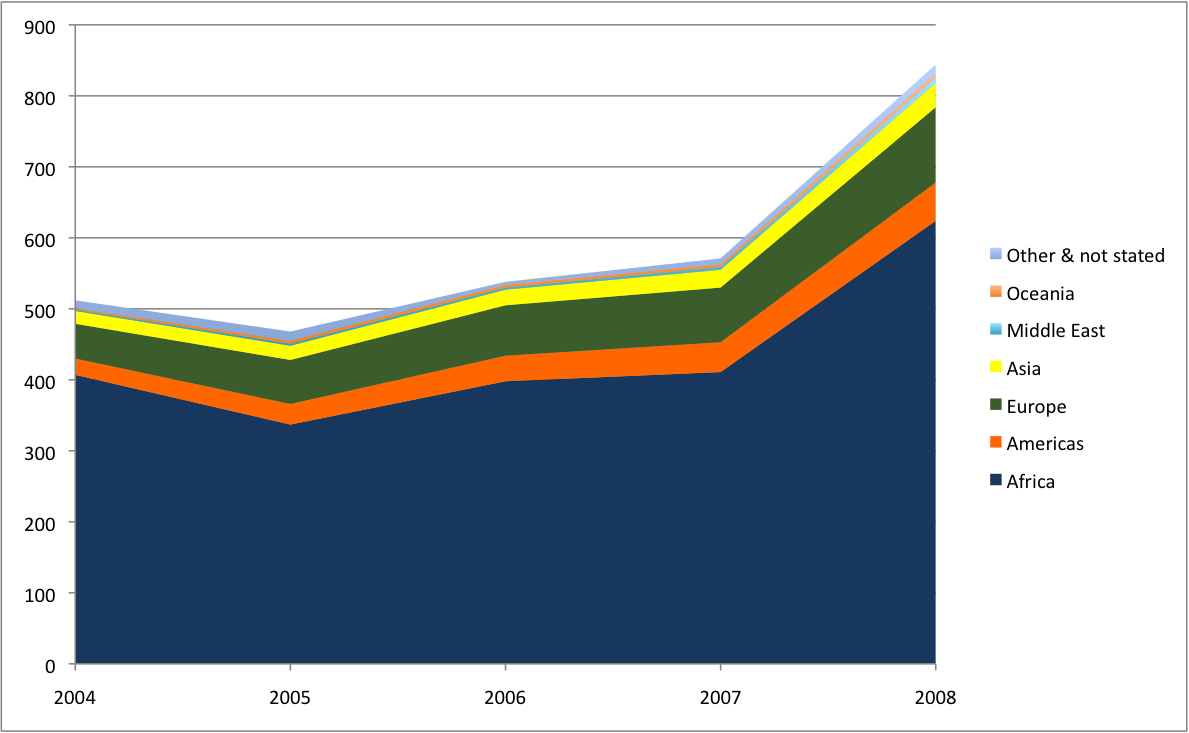
How many of these visitors are tourists?
Of the 840,000 visitors registered in 2008, only 144,000 listed “Leisure, recreation and holidays” as the primary reason for visiting, suggesting that tourists make up a relatively small portion of the visitors the the country. The number of visitors who go to national parks, around 138,000 in 2008, is also fairly good proxy for the number of those who are “tourists”, as opposed to those who are visiting family and friends, doing business, and the like.
For perspective, over 1 million tourists visited Kenya in 2009, and over 700,000 visited Tanzania (2009), and 68,000 holiday-goers visited Rwanda (2010).
Visitors to national parks in Uganda, by year
 In Uganda, Queen Elizabeth and Murchison are by far the most popular game parks, and we should probably expect more interest in Murchison in the coming years now that the LRA no longer poses a threat in northern Uganda.
The Uganda Bureau of Statistics estimates that tourism expenditure was US$590 million in 2008. This year, the Ministry for Tourism, Trade and Industry was allocated Ush50 billion, or about US$18 million, which amounts to 0.5% of the total budget. The Uganda Tourism Board was allocated US$740,000.
*Statistics above can be found on the UBOS website here. Budget information can be found in the 2011/2012 Background to the Budget, available here. I used an exchange rate of Ushs2700 to the dollar for back-of-the-envelope calculations.
Tourism in Uganda: A rant and suggestions
Please take a minute to check out the “Results of hotels in western” – Western Uganda that is. I am using the “official” online tourism guide provided by the Uganda Tourism Board to find a decent place to stay for a hypothetical trip to western Uganda. Helpful? Decidedly not.
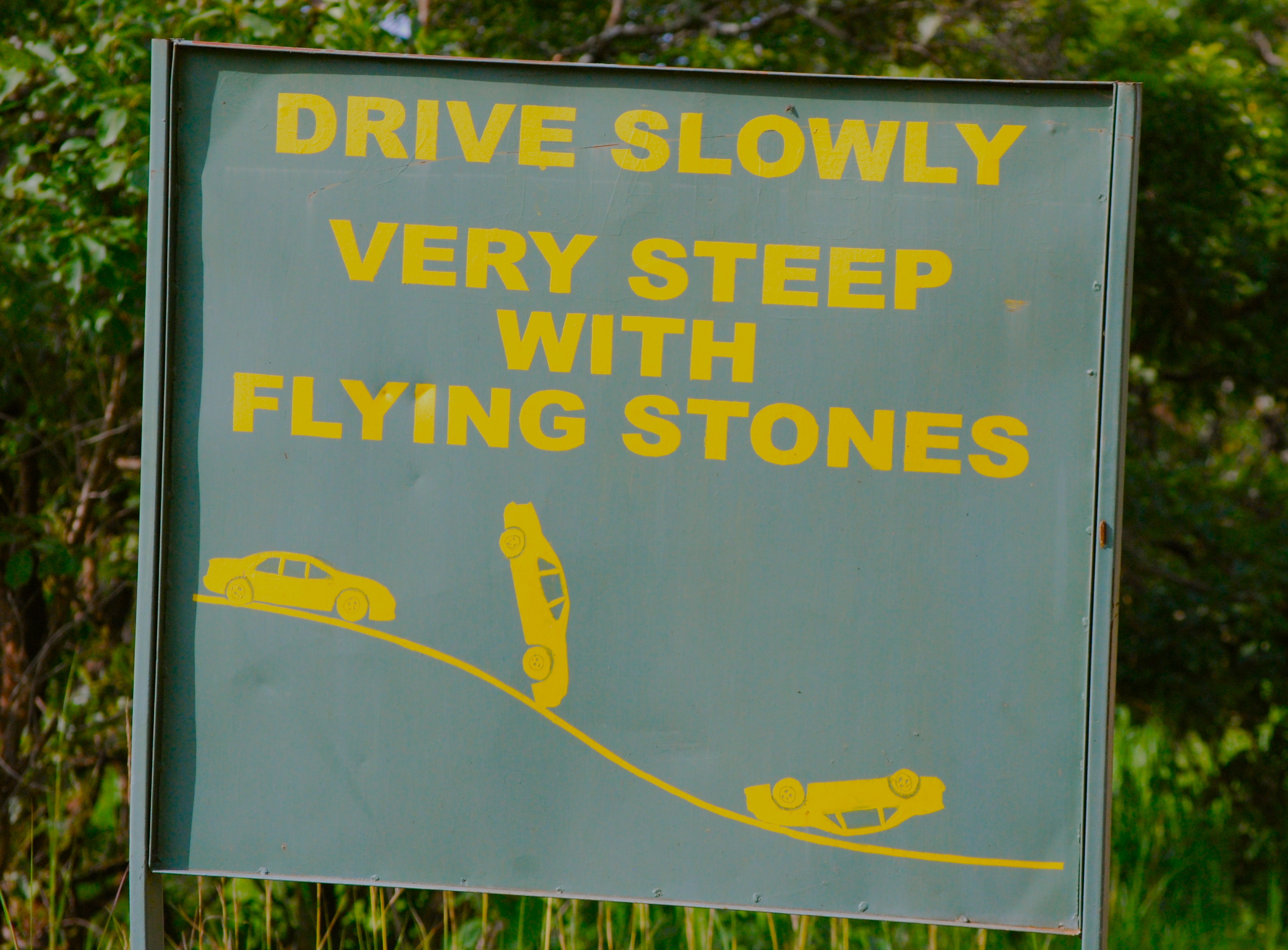
While Uganda holds a lot of potential in the tourism industry, the sector today is currently extremely user-unfriendly. If you have never been to Uganda, it is not only difficult to figure out what you should see in a limited period of time, but more importantly, how you will see it. Currently, guidebooks are probably your best bet (I have found Bradt’s most useful), but these can be quickly outdated and often do not contain enough detail about the various lodges, tour operators, restaurants, and other attractions.
Most tourists today will buy the odd guidebook, but turn to the internet for the most up-to-date and detailed information when planning their travel. Thus, maintaining a well-designed and user-friendly national tourism site is critical. Visitors need help sorting through information regarding pros and cons of various parks and other attractions, finding accommodation that matches their expectations and budget, and getting in touch with a tour operator they can trust with their lives and money.
Currently, if you go to a site like “Ugandatourism” – the second search result when googling “Uganda tourism” – you can find a (very incomplete) list of hotels with no indication of relative price or quality. The Uganda Tourism Board website’s list is slightly easier on the eye, and more comprehensive, but again you would not have any way of determining which of these many hotels would be best for you. (But hey, at least their site is working, which is more than can be said for the tourism department of the Ministry for Tourism, Trade and Industry).
On yet another site, the Uganda Tourism Guide suggests: “A little research in [sic] necessary to establish the reputation of the Uganda tour operator you choose to take care of your vacation. Take time to discover the membership of that operator in different Tourism organizations such as AUTO, Africa Travel Association, ATTA, Nature Uganda and so much more.” Let’s face it, this seems like a daunting task to those thousands of miles away and with no contacts on the ground. Very few people are going to “take time” to investigate and evaluate dozens of tour operators. More likely they will just give up and look elsewhere. Weeding out briefcase tour operators is not the job of a tourist, it is the job of government!
In all honesty, at this point in time, TripAdvisor is probably your best bet. The Eye has pretty good reviews as well.
Solutions
What to do? Since I try to avoid criticism that is not constructive, let me offer some suggestions (particularly for the website):
- Make very clear who is a certified tour operator with the Uganda Tourism Board or MTTI as well as who is blacklisted
- Provide information about the cost of hotels, restaurants, etc., (the $, $$, $$$ ranking is good enough) as well as customer reviews
- Discuss the pros and cons of various parks and other attractions (where will you see lions? Giraffes? Where can you go boating? Fishing? Birding? Even a basic chart will do)
- Set up a help center where interested visitors can email or call with questions or concerns, and are assisted by a real person with expertise in the sector. There is already something like this here, but I’m not sure how well it works.
- Clean up the bathrooms at national sites like the Ziwa Rhino Sanctuary and Source of the Nile. A little goes a long way.
- Prize and support the private sector.
- Overall, consider the customer. Look at everything from the perspective of the visitor – whether tourist, investor, or researcher.
Other suggestions?
Again, I haven’t even touched the domestic tourism sector, which, as far as I can tell, is not promoted effectively either. Even if you live in Uganda, you are forced to rely on word of mouth for recommendations on where and how to visit any of the many beautiful sites around the country. Tourism is not just a way to showcase Uganda, but is also (potentially) a major source of revenue. Competition with Kenya and Tanzania is high, and Rwanda is getting there too. The sector may not be the highest priority of government, but it’s high time to get serious about tourism in Uganda.
Let me stop there for now, and end with some stats on the sector, available here.
- In 2009, there were 1.08 million visitors to Uganda, a 5% decrease from 2008
- Of the 800,000 visitors coming through Entebbe airport in 2009, only 16% listed “leisure and holiday” as their primary reason for visiting
- The greatest number of visitors to the national parks are non-resident visitors, followed by Ugandan students, and citizens of Uganda
all the president’s men
…Museveni has increasingly become a drag on the ability of the country to move to the next state of consolidation. He has stabilised the political dispensation, sustained growth, tamed the army, facilitated the growth of a large and diversified private sector, a large and educated middle class and thereby laid the structural foundations for transformation. Yet his politics has remained unchanged in the face of this structural change, largely pandering to old social forces and unable to bring the new ones to the centre of his politics.
The political crisis in Uganda is therefore a product of the tension between an emerging new society and the prevailing political institutions and practices. If Museveni has successfully modernised Uganda, his biggest failure has been inability to modernise his politics.
That is Andrew Mwenda writing in the East African this week on how Museveni’s success is bringing him down. I largely agree with his analysis, but I think the role of those surrounding the president has been somewhat underplayed.
There has been a lot of hoohahing about the spilling of beans by the likes of John Nagenda, among many others, courtesy of Wikileaks. I personally enjoyed the final paragraph of Nagenda’s Saturday column (I can’t seem to find it on the New Vision website, which could use a redesign):
When I recall the whiskey-fuelled nights with various Ambassadors, Good God I shudder to imagine when and how I will be leaked!
All of this should tell us that many would-be advisors of the President are for whatever reason unwilling or unable to be frank with Museveni. Management of information to and from government, and the presidency in particular, is riddled with the same corruption and incompetence as is pervasive elsewhere. Who is the winner in this situation?
Perhaps Museveni’s success, as Andrew notes, is in many ways a major contributor to his demise. But many of those who surround him haven’t helped him “modernize his politics” either.
Impact evaluation and RCTs in health
I am currently working on a proposal for a pilot of performance-based contracts (PBC) in Uganda’s health sector, and have been busy navigating the literature out there. Fortunately for me, there is also a lot of discussion on randomized controlled trials (RCTs) and impact evaluation in the development blogosphere of late.
Today I’ve been reading “Performance Incentives for Global Health,” published by the Center for Global Development, and available for purchase or downloadable chapter-by-chapter here. It has proven very useful so far in helping me think through the various ways in which PBC pilots could be designed. In Chapter 5, A Learning Agenda, the authors write:
Impact evaluation is more than a tool for gauging impacts at the end of a program and providing the inputs into a cost-effective analysis. It can also help a program to evolve. For example, in the initial phase of a pay-for-performance program, three contracts with different risk levels can be piloted. Based on the results from an early evaluation, the most effective contract can be scaled up. Several parameters lend themselves to this kind of experimentation, including the relative effects of supply versus demand interventions, the level of rewards offered for performance, and the balance of trade-offs between access and use.
Rwanda is often noted as a pay-for-performance (P4P) success story, and Chapter 10 is devoted to this case study. The original study by Basinga et al. (2010) is available here (and co-authored by Rwanda’s current Minister of Health, Agnes Binagwaho, also available at @agnesbinagwaho). The authors find that P4P has a significant effect on the number of deliveries in health facilities, quality of prenatal care, and number of preventive care visits for children, but they find no effect on the number of prenatal care visits or immunizations.
In Uganda, a similar pilot, this time of private-not-for-profit (PNFP) facilities, found no effect of bonuses on health facilities’ performance in achieving self-selected health targets. They did find that financial autonomy improved health facilities’ performance, however. The study, “Contracting for Primary Health Care in Uganda”, remains an unpublished World Bank manuscript, as far as I can tell (publication bias at work), but the slides from the 2007 CGD presentation are available here.
I’d like to examine the effect of PBC on health outcomes in the public rather than PNFP sector (hopefully using a few variations of the contract “treatment”), as well as better understand why performance-based pay (in the form of bonuses) did not seem to have an effect on health outcomes in the Uganda pilot. Finally, I am interested in understanding the relative efficacy of supply-side (such as PBC) vs. demand-side (such as conditional cash transfers) efforts in improving various health outcomes. More updates on this to come.
reading: the cables
Who isn’t? I have to say though, the wikileaks site is not user-friendly. I consider myself reasonably computer-literate, and I’m embarrassed to say it took me no less than 4-5 minutes to find the cables on Uganda from the main wikileaks page. I was busy searching for “Uganda”, until it dawned on me that the operative word was “Kampala.” I hope you’ve all struggled less than I, but just in case, the link to the Uganda (I mean, Kampala) cables is here.
I’m writing in the car from the parking lot of Nakumatt, with a low battery, looking sketchy*, so this will have to be a short one, but there is a lot to be discussed. Perhaps most interesting about the cables is not what they say, but what they do not say.
There are plenty of resources at the fingertips of the U.S. government, but information gathering is a people-based endeavor that requires the building of relationships and trust. I don’t admire those who have only two years to not only get their bearings, but also develop the kind of relationships that allow for the analysis of complex situations. But I guess that’s why I didn’t join the foreign service. When a foreign service officer begins referring to “Bugandans”, you know you’re in trouble.
More on this soon…battery is in the red.
*this is actually a happening spot for the young and restless of Kampala, in case you didn’t know. Its charm eludes me, but I guess that is a sign of the times. I’m getting old!
why blog?
Given the many other things that need to get done in a day, why blog? This is a question I have been repeatedly asking myself, especially in deciding what to write here.
There are lots of tips out there on how to blog. A 2008 Slate article featuring Arianna Huffington, Om Malik and others (book available here) gives the following tips:
Set a schedule and blog often
Write casually but clearly
Add something new
Link to other blogs
Be patient
Sounds simple enough. Really, I could have given that advice, and I’m an amateur! There are hundreds of websites dedicated to blogging tips and advice, getting more traffic, blogging for money, and the like. But many don’t answer the question, why blog? — which is the far more difficult question.
Andrew Sullivan, formerly of The Atlantic (now at the Daily Beast), writes why he blogs in a very thoughtful essay:
To blog is therefore to let go of your writing in a way, to hold it at arm’s length, open it to scrutiny, allow it to float in the ether for a while, and to let others, as Montaigne did, pivot you toward relative truth. A blogger will notice this almost immediately upon starting. Some e-mailers, unsurprisingly, know more about a subject than the blogger does. They will send links, stories, and facts, challenging the blogger’s view of the world, sometimes outright refuting it, but more frequently adding context and nuance and complexity to an idea. The role of a blogger is not to defend against this but to embrace it. He is similar in this way to the host of a dinner party. He can provoke discussion or take a position, even passionately, but he also must create an atmosphere in which others want to participate.
I think my own purpose in writing in this very public (if not terribly widely-read) forum, is both to document for myself the ideas and experiences I encounter and develop (I will surely forget the majority of those that I do not commit to “paper”), and to mold, refine, and even cast aside ideas and arguments with the help of time and those who will share their own ideas, knowledge, and experiences here.
I guess you are not supposed to say in your blog that you sometimes have difficulty writing at all, but there you have it. I have considered, begun writing, and dumped several ideas in just the past week (let’s take the KCCA vendor issue as one example), not to mention many times before that, mostly concerned about posting because I hadn’t fully developed an argument, didn’t have all the facts, or wasn’t entirely confident in my analysis.
But herein lies the difference between an article and a blog (at least mine) — I don’t promise perfectly penned prose, but rather my frank thoughts, open to your ideas, looking for new knowledge, in the hope that we can think through issues together. That is why I blog.
death by bathroom floor
As I prepare for (pretty fabulous) spinning class at Kabira gym (seriously, the bikes are great and the music bumping), I gingerly touch a black-and-blue right knee. You see, a few days ago as I was doing some laundry in the bathroom, I absentmindedly spilled some soapy water on the floor.
After hanging the delicates to dry, I bounded back into the bathroom and shwoooop! Down I went. Left leg out, right knee down, into what would have been the splits if I had been more flexible. My hand automatically flung out to grab the towel rack, but somehow in that moment I thought of the landlord and decided not to hang my weight on it.
Fortunately, all I suf fered was a sore (and not split) knee, and my head remained far from the floor. But do you know that there are at least 9,000 deaths per year due to bathroom accidents in the U.S.? And there are over 230,000 non-fatal ER visits due bathroom injuries among those 15 years and older? Silly as it feels when you are splayed across your bathroom floor, this is surely no laughing matter.
I got up thanking my lucky stars I wasn’t elderly (or just positioned differently), for I surely would have broken something.
Bottom line: beware Omo on a wet floor! And don’t underestimate the power of the loo.
Throwing aid at HIV
Some colleagues at APSA shared a new paper by Nunnenkamp and Öhler investigating the effect of official development assistance (ODA) on HIV-related health outcomes in developing countries. The authors write:
Optimally, ODA would help prevent new HIV infections as well as provide better care for the infected. Our results indicate that ODA-financed prevention has been insufficient to reduce the number of new HIV infections. By contrast, we find evidence of significant treatment effects on AIDS-related deaths for the major bilateral source of ODA, the United States.
However, the treatment effect proved to be insignificant when multilateral organizations represented the major source of ODA. In particular, our findings are in sharp conflict with claims of the most important organization in this field—the Global Fund to Fight AIDS, Tuberculosis, and Malaria—that its performance-based support has saved almost five million lives by the end of 2009.
It seems HIV/AIDS related foreign aid is coming under increasing scrutiny these days, at least by academics. Like Bendavid and Bhattacharya (2009), Nunnenkamp and Öhler find U.S.-funded PEPFAR associated with reduced deaths due to HIV/AIDS, but not reduced prevalence of HIV. The inability of billions of dollars to reduce new infections is troubling indeed.
Touring Uganda: Chobe Safari Lodge
A few weeks ago I took a trip with my family to Murchison Falls National Park, in northern Uganda. We stayed at Paraa Safari Lodge for two days before heading to the newly renovated Chobe Safari Lodge, both managed by Marasa, of the Madhvani family.
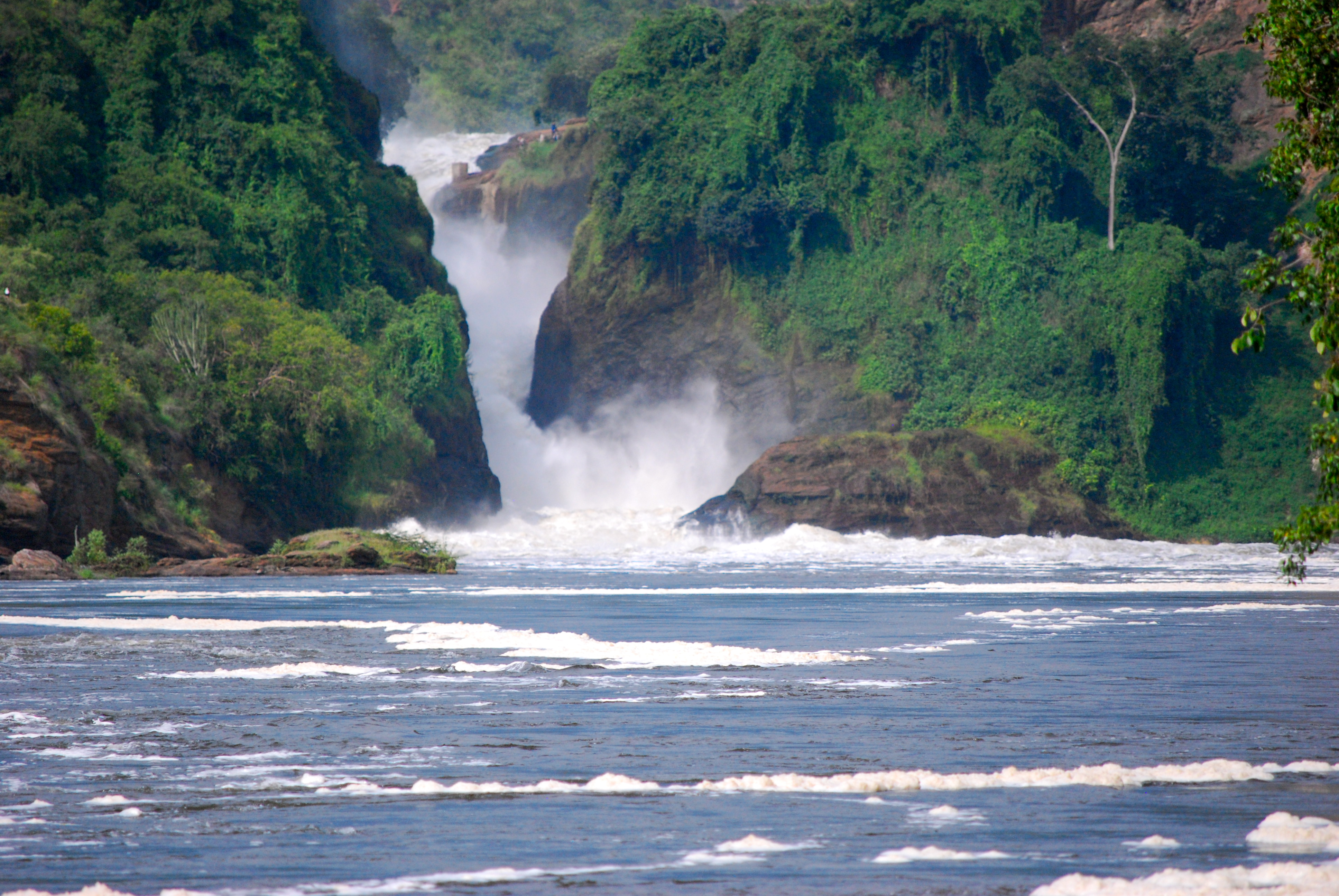
The two lodges provided a very interesting contrast (while keeping ownership constant! errr…). Of course, there is far more to do around Paraa, including game drives and boat trips up to the foot of Murchison falls (do falls have feet?), and the lodge at Paraa is much more antiquated than the sparkling new Chobe. But the clientele is different as well. During the two days we spent at Paraa, the guests were almost exclusively European (many German, in fact). At Chobe, by contrast, a majority (by my eyeballed count) were Ugandan.

Why? There isn’t much in the way of a domestic tourism culture in Uganda, though park fees for East African citizens are a fraction of the cost for non-East Africans (though not explored here, developing domestic tourism is a topic that deserves a post of its own). So, my guess is that, since Paraa is quite far from any towns, it is not so cushy that one would go out of one’s way just for the ambiance of the lodge. It is mainly a comfortable, rustic place to sleep and eat between game drives and boating.
By contrast, it seems that many guests of Chobe are visiting from Gulu or other nearby urban centers, and are visiting for conferences and meetings, not to see sight-see — although there are some lovely sights to see (just not many animals). You can never get tired, for example, of the breathtaking view of the Nile. The hotel grounds and dining areas are also quite beautiful, and the rooms are much more elegant than Paraa (bed firmness notwithstanding). In short, the newly renovated lodge is a very comfortable place for those with the cash (politicians and NGOs alike) to get away for a weekend retreat. Chobe today could be considered the “Serena of Gulu”, for those of you familiar with the patrons of the Kampala branch of that hotel (h/t Angelo).
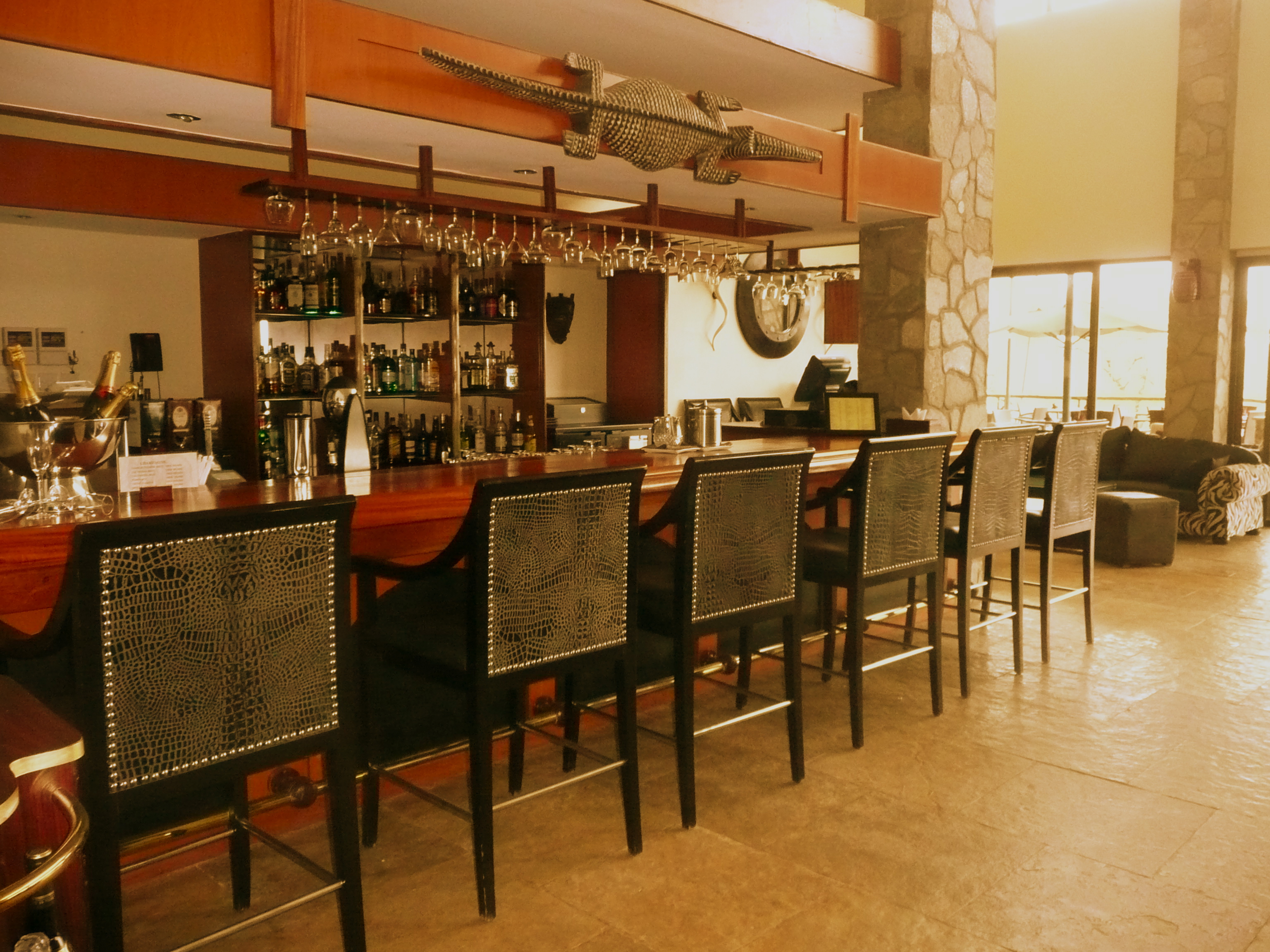
The ambiance and clientele of Chobe may change as time goes on, and as the lodge develops more activities (a golf course has been proposed, for example). But for now it is a peaceful, if pricey, place to recharge for a few days. And the staff are fantastic.
Chobe is a short distance from Karuma falls, and is about 4 hours from Kampala, on good roads almost all the way. I’m happy to provide more details or a more extensive review to anyone interested in visiting.
 Melina Raquel Platas