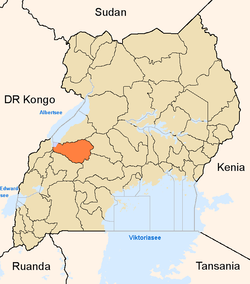
An outbreak of Ebola that started in Kibaale district, western Uganda, has spread to Kampala, say government officials (including the president). So far 14 people have died from the Ebola virus, and at least a dozen more have been infected. As more information becomes available, I will post it here.
Many of the cases so far are reported to have come from the same family, in addition to a health worker in Kibaale, Clare Muhumuza, who was transferred to Mulago Hospital, where she died.
According to the Centers for Disease Control (and common sense), a critical factor in stopping the epidemic is to recognize an outbreak and respond quickly. It appears as though this is the third week since the outbreak in Kibaale. Let us hope not too many people were infected before news of the outbreak and government response became public.
After over 70 million views (100 million plus by the time this is published online) and countless tweets, the Kony 2012 video has reminded us of one thing: it is not quality alone that popularizes ideas.
Today, the marketing of your ideas matters as much or more than the content of the ideas themselves. At first blush, this seems a sorry or even scary state of affairs. But consider the evolution of the marketplace for ideas. Ideas have never found the light of day based on their merit alone. Access to bullhorns has long depended on identity – on status and class, on race and gender, on education and religion. Today technology is shaking things up, and democratizing the marketplace for ideas. The identity of the idea-producer is increasingly distanced from the idea itself. The barriers that once favored the voices of the few over those of the many are slowly fading.
Over the past week I have had countless conversations with students, friends, and even strangers about Uganda, the Lord’s Resistance Army (LRA), Joseph Kony, and of course, the campaign and video that started these conversations in the first place, “Stop Kony 2012”. This sudden and remarkable outpouring of interest about a rebel group that has been around for decades is the result of the work of a single organization, Invisible Children. There have been spirited debates about the veracity of the film, ethical questions about its content, financial issues, concerns over the stated goals of the organization and film, and a larger debate about the role and motivation of outsiders in “African affairs”. Perhaps the most maddening aspect of the Kony 2012 film is that agency is so consistently placed on the part of the three filmmakers who “discovered” the conflict in 2003. (You have heard this story before. John Hanning Speke too “discovered” the source of the Nile – this is what has been “marketed” to pupils in most schools up to today). The version of the story told by Invisible Children tends to position the three men and their organization front and center at the expense of all other actors. It does not deal in nuance, and it shies away from complexity.
Critics of the film have struggled to put forth alternative versions of the evolution of the conflict, and the current challenges that the region faces, of which the LRA is only one. But many fear the damage has been done. They fear that Invisible Children has hijacked the conversation, pushing aside or simply ignoring the work that journalists, academics, policymakers, development workers, and ordinary citizens have been conducting for years. IC has proposed their own solutions to ending the terror of the LRA, which include sharing their video, buying an “action kit” (posters and bracelets inclusive), and raising money for the organization. They have virtually blanketed the web, at least for a period of time, with their own propaganda, their own ideas.
The phenomenal success of their campaign, at least as judged by the number of viewers, hinges not on the quality of their ideas and not on the feasibility or sensibility of their proposed solutions, as many experts will attest, but rather on their access to the platforms that get out the word. They are well equipped to execute their campaign – trained in film production, with a snazzy website and killer social media strategy, they have the all tools to dominate the marketplace for ideas.
Is this not unfair? Wrong? Even dangerous?
If the simplistic, emotive, and well-marketed ideas are the ones that make it to the global stage, should this not give us pause? Some argue that it is the very ideas that play to our underlying prejudices and the stereotypes that we find most moving (i.e. the west must “save” Africa), amplifying rather than dispelling our biases. They argue that the vast and diverse sources of news and information allow us to further distance ourselves from ideas we don’t like and fixate instead on those that support to our prior beliefs.
To the extent that government policy is driven by the masses, whether they take to the streets or to their Twitter accounts, should we be concerned about the quality of ideas that eventually make it to the mainstream? What happens when these ideas are the products of sleek marketing rather than of cool-headed and careful deliberation? These are all important questions.
The process that brings ideas to the center stage of public debate is not fair and does not give everyone equal say. Nor has it ever. But the good news is that the very technologies that have allowed IC to kick-start the conversation on the LRA have also allowed competing voices to fight back and provide an alternative view. In fact, in a departure from days past, social media may differ from the platforms of old in that it cannot easily be controlled to produce dangerous hysteria. You cannot stifle dissenting opinion for long in this day and age of hashtags and viral videos.
Perhaps IC has not hijacked the conversation after all.
Youtube, Twitter, Facebook, blogs, and other online media have allowed critics to respond to the IC campaign in real time. No sooner had the IC video come out than online posts pointing out its many flaws began to pepper the blogosphere. Within hours, IC had posted a response on their website, and the debate raged on. Journalists and ordinary citizens used online platforms to share their responses and concerns, and millions of people watched and listened. This is remarkable. The platforms that allow the dissemination of ideas are increasingly open for business. The marketplace for ideas, however flawed, is expanding.
Don’t get me wrong. There is a long way to go. The fact that most people living in northern Uganda, even capital cities like Kampala, Kigali, and Kinshasa, were not even aware of the video (not that they missed much) only highlights the disparity in global connectivity, and as such, inequality in access to arenas where their voices can be projected loudly and widely. Those who set the agenda and those who have the first say in the debate are often still the most powerful not because of the quality of their ideas but because they know how to market them. The increase in information of all kinds means that people can seek out that which will confirm their biases and prejudices. But access to the microphone stretches farther than it ever has before. And this is good news. The question is what will we do with it?
Driving through the countryside or city streets in Uganda or Rwanda, one is greeted by the same sight over and again – children. Youngsters in colourful uniforms fill the sidewalks and paths every morning and afternoon as they trek to and from school.
Jogging in the early morning down Kigali streets I have more than once been embarrassingly out-run by little girls in dress shoes and backpacks, screeching gleefully as they dash past. Meanwhile, the smaller children toddle curiously around the home, and babies find themselves securely strapped to the backs of their busy moms. You don’t have to look up demographic figures to know that one word characterizes the population: young.
In a region long defined by civil war, violence and dictatorship, youth is the new and hopeful quality permeating society. The wars that wracked the region for the past several decades have drawn to a close, one by one – the Ugandan civil wars of the 1970s and 1980s, the 20-year terror of the Lord’s Resistance Army in Northern Uganda, the Rwanda genocide of 1994, and the Congo wars that followed. As the worst episodes of violence recede, how will newfound security affect the political, social, and economic opportunities and beliefs of the new generation? How will the youth relate to the decisions of leaders whose lived experiences are increasingly distant from their own?
The children and young adults of today will live profoundly different lives than those of their parents and grandparents. While conflict continues in eastern Congo, a peace and cautious hope has come to most of the region. Nearly half of Rwanda’s population today was born after 1994. 52% of Rwandans and 61% of Ugandans are less than 20 years old. Nearly three quarters of all Ugandans have lived under President Yoweri Museveni for their entire lives.
Most Ugandans and Rwandans, therefore, know only stories of the terrible wars that once ravaged society. The scars, visible or not, are everywhere, but the memory is increasingly derived from history passed down by those who lived through it. As these children come of age, they face very different challenges than their parents before them. The vast majority will attended primary school, and will read and write in English. Many will graduate from secondary school, and an increasing number will obtain a university degree. Unlike their parents, most will not fear for their lives, but for their livelihoods.
Yet for now, those who govern the countries in which these children grow up – individuals who were intimately involved in the conflicts of the past several decades – continue to make calculations, judgments, and risk assessments based on the experiences through which they have survived, as have done leaders before them. National security is at the top of the agenda for every government, but the price one is willing to pay for security is shaped by experience. For the older generation, there may be no price too high. For the younger generation, the choices may not be so clear-cut.
It is difficult to assess the extent of the divide between today’s youngsters and the generation that preceded them. Often votes are a good indication of political and policy preferences, but the post-conflict generation is only just coming of age. Surveys too can help, but ultimately we are left to some speculation.
Recent surveys in Rwanda show that both the young and old continue to place a high value on national security. Overall, 44% of Rwandans said that “strong defence forces” should be the top national priority, with a similar percentage across all age groups, according to the World Values Survey. In the U.S., by contrast, while 38% of all Americans surveyed believe strong defence forces is the most important national priority, only 20% of those under 30 list national defence as the top priority. The vastly different security challenges facing each country have surely shaped these preferences.
In Rwanda, an extraordinarily large percentage of people not only support strong defence forces as the top national priority but would also contribute to this goal – 95% of all Rwandans and 96% of 15-29 year-olds surveyed said they would be willing to fight for their country. In the U.S., only 41% of 15-29 year-olds were willing to do so. 91% of Rwandans also expressed a preference for greater respect for authority in the country. All this suggests that so far, there is little evidence of a generational difference in security preferences. Nevertheless, it is important to keep in mind that most of the peacetime generation is still too young to be included in any survey. We are likely still observing the preferences of an adult population for whom the remnants of conflict may still be too fresh, and continued violence in eastern Congo too close.
In Uganda, evidence is mixed regarding whether the old and young have different preferences when it comes to national priorities, but there appear to be greater differences than in Rwanda. There are obviously serious economic challenges facing Ugandans, which may trump security concerns for the ordinary citizen — 64% of 18-29 year-olds were unemployed in 2008, according to an Afrobarometer survey. For most Ugandans, “improving economic conditions for the poor” is the most important national priority. Only 17% of 18-29 year olds listed maintaining order in the nation as the highest priority. Interestingly, young people expressed greater fear of political intimidation or violence than the very old in Uganda – 36% of young people said they had “a lot” of fear of political violence. And worryingly, the majority of Ugandans believe political competition often or always leads to conflict.
Uganda and Rwanda are both societies in transition — transition away from conflict, transition toward greater political participation, transition out of poverty. How today’s children will view the behaviour and policies of leaders whose life experiences are increasingly distant from their own is yet to be seen. It may be too soon to detect generational differences in any scientific way, but ready or not, the youth bulge is coming into its own. Young people already make up the lion’s share of the population in the region. In just a few years they will be the king and queen-makers, or breakers. Watch this space.
A problem of supply in services is limiting further improvements in maternal health
Fertility rates in Rwanda have been falling steadily over the past several years, but this year close to 400,000 Rwandan women will become pregnant and give birth. Next door in Uganda, four times as many women will become pregnant, approximately 1.5 million. If recent trends hold, nearly 10,000 of these women will lose their lives during or shortly after their pregnancy. Many of them will suffer from bleeding and infections that can be treated or prevented.
Surveys show that pregnant women in both Rwanda and Uganda seek antenatal care at very high rates. Nearly 98% of women in Rwanda and 95% in Uganda have at least one antenatal visit during their pregnancy. These women want information about their pregnancy, and seek out health services that they believe will help them have healthy babies. But often the health system fails to provide these women with the information they need to take care of themselves, and far too many mothers lose their lives because they do not receive emergency care in time. Rwanda has been showing steady progress in improving maternal health, but Uganda has faired poorly.
Both Uganda and Rwanda continue to have high levels of maternal mortality, defined as the death of a woman while pregnant, or within 42 days after the termination of pregnancy (excluding accidents). Between 1985 and 1995 in Uganda, maternal mortality was estimated at 527 deaths per 100,000 live births. The following decade, from 1996 to 2006, maternal mortality was estimated at 435 deaths.Although these figures suggest a slight decrease over the past twenty years, the margin of error around these estimates are such that we cannot say with any confidence that maternal mortality rates have changed at all between 1985 and today. Thus, it appears pregnant women in Uganda today are equally likely to die in childbirth as they were 25 years ago, when the National Resistance Movement came to power.
Meanwhile, maternal mortality in Rwanda has fallen significantly, although rates in Rwanda have for some time been higher than those in Uganda. Between 1995 and 1999, maternal mortality in Rwanda was estimated at 1071 deaths per 100,000 live births, one of the highest rates of maternal death in the world. Between 2000 and 2004, however, it had dropped to 750. The most recent estimates should be available in the next year or so, and are likely to show even further decline.
Rwanda may have made greater strides than Uganda in reducing maternal mortality in the past decade or so, but both countries face significant challenges in improving maternal health. There is a long way to go. The good news is that unlike many types of preventive health behaviors, such as getting immunizations or sleeping under a bednet, seeking help during pregnancy has become very common, even natural. In other words, the demand for health care during pregnancy appears higher than for many other health issues. Unfortunately, while demand is high, supply of care during pregnancy is weak.
Although nearly all pregnant women seek antenatal services at least once during their pregnancy, not all clinics and health facilities are equipped and ready to meet their needs. In fact, most health facilities are lacking the basics when it comes to antenatal care. The Service Provision Assessment Survey 2007 found that only 31% of health facilities in Rwanda had all the items required for infection control, including running water, soap, latex gloves, and disinfectant, and only 28% had all the essential supplies for basic antenatal care, including iron and folic acid tablets, tetanus vaccines, and equipment to measure blood pressure. A mere 11% had all the medicines required to treat pregnancy complications, including antibiotics, antimalarial drugs, and medication to treat common sexually transmitted infections.
To make matters worse, very few women were given sufficient information so that they could take good care of themselves at home during their pregnancy. Only 8% of women in Rwanda were told about signs of pregnancy complications, while only 35% of women in Uganda were informed. It is perhaps not surprising that only 35% of Rwandan women and 47% of Ugandan women attend the recommended four antenatal visits. When women arrive in clinics, often without power or water, which do not provide the necessary equipment and information to help them with their pregnancy, there may be little incentive to keep going back.
Of course, the news is not all bad. On the contrary, the improvements that have been made in maternal health, particularly in Rwanda, are extraordinarily impressive. In just five years, between 2005 and 2010, the percentage of mothers whose delivery was assisted by a trained and skilled provider increased from 39% to 69%. The percentage of mothers who delivered in a health facility jumped an equally miraculous 28% to 69%. The increase in births under the watch of a skilled provider has likely played a large role in the reduction of maternal mortality. An estimated 15% of all pregnant women will encounter life-threatening complications, and trained nurses, midwifes, and physicians can help make sure these complications do not become fatal.
The fact that pregnant women appear to seek out services and information at high rates is a great opportunity for public health, but this opportunity is squandered if health facilities are poorly equipped to provide care. While Rwanda has made strides in improving the supply of care, there is less evidence of improvement in Uganda. The results speak for themselves.
Why small increases in price can lead to a steep decline in demand for essential products
A piece of nylon netting is a useful thing. It can be cast as a fishing net, hung as a curtain, or draped over a seedbed as protective covering. Netting can make a stunningly white wedding dress, or even a make-shift chicken coop.
One can also sleep under it, of course, to keep mosquitos from biting at night. Though insecticide treated nets (ITNs) are routinely distributed in malaria endemic regions, often subsidized by major donors such as the Global Fund, many worry that such campaigns are frequently futile. Anecdotal evidence from the Kenyan shores of Lake Victoria to the alters of Ugandan churches suggest that these bednets are sometimes quite literally cast aside or otherwise misused.
While misuse is certainly problematic from the perspective of those funding mosquito net campaigns, it also raises a broader question, and one with serious implications for public policy in malaria prevention and beyond: Do people value and use things that are given to them for free?
There are two competing arguments used to answer this question. The first argument says that people value more that on which they spend their own money or resources. Furthermore, people will spend some money, when they can afford it, on those objects that they perceive to be useful. A second argument says that if an object is perceived to be useful or of value, people will use that object regardless of whether they purchased it or whether it was given to them for free. The ubiquity of incumbent presidents’ campaign t-shirts in both opposition and stronghold areas is supporting evidence for those in the latter camp.
The mosquito net-cum-wedding dress is a classic illustration of the dilemma of freebies. The protective power of mosquito nets against mosquito bites and thus, malaria, is rather less effective when the net becomes a nuptial adornment or is tossed into a river, much less left in its packaging and stashed in a corner. The creative use of nets is thus often the go-to anecdote for those in the first camp of the freebie question.
Anecdotal evidence, unfortunately, can only get us so far in adjudicating between these two perspectives. Fortunately, a number of development economists have been systematically evaluating the extent to which people use services or tools given to them for free and those provided at a cost. While there is still no definitive answer, and while context matters, much of the evidence seems to suggest that people use many free goods at high rates, and often will not purchase the same products when provided even at very low prices.
A group of researchers at the Abdul Latif Jameel Poverty Action Lab, based at the Massachusetts Institute for Technology (MIT), recently wrote a report summarizing ten studies examining the question of whether user fees and cost-sharing increase or decrease the use of health and education services and products. The majority of the studies were conducted in Kenya, although some were also conducted in Uganda, Zambia, and India. Their findings are striking, and the title of the report says it all: “The price is wrong.”
Time and again, small increases in price lead to a massive decline in demand for products including water disinfectant, deworming medicine, mosquito nets, and soap. For example, one study in Kenya found that while over 80% of people used a mosquito net if they received it for free in a prenatal clinic, only 20% would purchase the net for $.60 (approximately 50 Kenyan shillings or 360 Rwanda Francs). Similarly, another study in Kenya found that while nearly 60% of people used water disinfectant when it was given to them for free, less than 10% would use disinfectant if charged $.30 for the same product. This general pattern appears to repeat itself in different locations and with different products.
Two things are thus evident. First, people are often unwilling to purchase a number of goods and services that promote health and education even at highly subsidized rates. Second, people often use those same goods and services at high rates if they are provided for free. Clearly, receiving something for free does not preclude its use. If we think back to the wedding veil problem however, it is also clear that some products may not be used as prescribed, fee or no fee.
Why are people so sensitive to price when it comes to potentially life-saving goods and services? Individuals and families weigh the costs, monetary or otherwise, of procuring and using goods and services against the expected benefits from using those goods. Bednet wedding veils notwithstanding, in most cases it appears that families perceive some benefit from using goods like mosquito nets and soap, since rates of usage are quite high when the product is free. Some speculate that people may not physically have the cash on hand to buy even very inexpensive products, or that other inconveniences, such as the time it takes to procure a product, may affect their decision. But these are only partial explanations. It is also possible that people do not believe products will be as efficacious as researchers and policymakers think they will be in promoting their health.
Available evidence suggests that people who receive goods and services for free often do use them, although the extent to which they will use them and how they will use them is subject to some debate. Even if there are large benefits to providing free bednets, water disinfectant, soap and the like, products that often provide benefits that extend beyond the individual recipient, the question of sustainability comes to the fore. In the short term, the provision of free goods and services, particularly those that promote preventive health behaviors (like hand-washing) may have large and positive effects on the health of families and communities. But ultimately, we need to better understand why people are often so unwilling to spend even small amounts on products that have the potential to keep their families much healthier.
A study by Mishra et al (2008) using data from the 2004-5 Uganda HIV/AIDS Sero-Behavioral Survey (UHSBS) suggests medical injections are positively associated with HIV status among Ugandan adults, even after taking into account other HIV risk factors and reverse causality (i.e. HIV positive individuals seek more medical care). Even if iatrogenic transmission is not the primary mode of transmission of HIV today (though Pepin argues it played a pivotal role in the early spread of HIV), this finding is worrisome. The authors conclude:
Our analysis showed a strong positive association between number of medical injections and HIV infection. Receiving frequent medical injections was significantly positively associated with HIV positive serostatus among Ugandan adults. Even after controlling for several potential confounders, and accounting for possible reverse causality from HIV infection to increased use of medical injections, men who received five or more medical injections in the previous 12 months were 2.3 times more likely to be HIV infected, and women 1.5 times more likely to be infected, compared with men and women who received no medical injections.
Our results are consistent with the literature showing a positive association between medical injections and HIV infection (Mann et al. 1986; Deuchert and Brody 2006; Barongo et al. 1992), and provide further evidence that medical injections may increase the risk of HIV infection.
…our finding of consistent and strong positive association between multiple medical injections and HIV infection reinforces the need to strengthen programs to promote injection safety and reduce non-sexual modes of HIV transmission. Medical injection as a potential mode of HIV transmission deserves continued research and programmatic attention. Program priorities for Uganda may include focus on rational use of injections, implementation of the national injection safety guidelines, and further scale up of medical injection safety programs.
Nodding disease is a syndrome that was first reported in Tanzania in 1962, has been spreading in South Sudan and Uganda more recently. The number of cases in northern Uganda appear to have increased at a particularly fast clip in the last year. Nodding disease sounds made-up, but it is very real and often fatal, and is becoming a growing problem in the region. Most problematic is that the causes of nodding disease are still unclear, although there appears to be a connection with a parasitic infection from Onchocerca Volvulus, which causes river blindness.
Adult Onchocerca volvulus worms (WHO)
The Daily Monitor ran a story on December 23, 2011, quoting director of health services in Uganda, Dr. Jane Achieng, as saying that there are around 2,200 reported cases of nodding disease in Uganda (most in Acholi sub-region) and that the first case in the area had been reported in 2009.
Nodding disease appears to afflict children between the ages of 5 and 15 and is usually diagnosed by the characteristic nodding it produces in children. The head nodding (HN) is often triggered by eating or seeing familiar foods, or when a child becomes cold. Winkler et al. (2008) write:
HN represents a repetitive short loss of neck muscle tone resulting in a nodding of the head, sometimes associated with a short loss of muscle tone of the upper extremities. Loss or impairment of consciousness may be present, but not always. To date HN is not mentioned in any classification and it remains unclear whether it represents a seizure disorder and if so, whether it belongs to the group of generalized or partial seizures.
Nodding disease appears to be a growing problem that warrants serious attention from the government. The CDC and WHO have been involved in investigating its causes, but there has been relatively little information available to the public about this illness. I’ll be posting information on the published medical literature on nodding disease, as well as news updates and commentary as they become available.
Accessing people’s thoughts and interests from Asia to Africa is just a click away
It used to be that education primarily took place in a classroom. These days, the chalk and blackboard are fading away and steadily being replaced, or at least complemented, by new technology. Even in some of the world’s hardest-to-reach places, cell towers and solar-charging stations are re-inventing the learning and communication experience. Alongside the traditional classroom teacher are laptops and cell phones, paving the way toward a whole new way of seeing the world.
A world of data is at your fingertips, quite literally. The advent of personal computers and increasing interest in making information open and accessible to all means that we now have the ability to answer many questions faster and more accurately than we ever thought possible. Information on everything from economic growth to weather patterns to flu outbreaks is just a Google search away. Data and data sources are not without their flaws, but we can often see broad patterns much more clearly across and within countries than we once could. The question is, how can we take advantage of new and ever increasing sources of information? Perhaps one of the most novel uses of data pieces together the wisdom of the crowd. In particular, Internet search terms are an amazing guide to all sorts of phenomena we care about, including public opinion on politics and policies, investment interests, and even trends in infectious disease.
What kind of information are people searching for? What are the questions to which they seek answers? One can of course look at broad trends in search engine search terms across countries, something similar to looking at words and topics that are “trending” on Twitter, but one can also look for more specific information. How many people in the U.S., Europe, or Asia look for information about Rwanda, for example? What kind of information do they look for? Google Insights for Search can help answer these kinds of questions, and reveal interests from potential investors, tourists, and others that can be useful to the local business community, government, civil society, and individuals.
If you look at the most frequent search terms related to “Rwanda” used by those living in the United States, France, or even China, you’ll find that most are related to the genocide or the movie, Hotel Rwanda. Within the U.S., searches for “Rwanda genocide” spike every April and May, although the spikes are becoming smaller over time. This is some indication that while the world still heavily associates Rwanda with genocide, this association is becoming weaker with time. Searches for “Rwanda safari” or “Rwanda gorillas” increased greatly in 2005 and 2007 respectively, and most of these searches came from individuals living in the United States or the UK.
Meanwhile, searches about Rwanda in the East African region show a very different pattern. The top three search terms about Rwanda from those living in Uganda and Kenya are all related to jobs, and primarily come from three cities, Kampala, Nairobi, and Mombasa. Meanwhile, searches from within Rwanda about Uganda focused on news outlets, such as the Daily Monitor, New Vision, and “news Uganda” more generally. The most common searches in Rwanda about Kenya include Kenya Airways, the Daily Nation, and Kenyan universities.
Understanding search trends can be useful for businesses and entrepreneurs, but they are also a cheap and easy way to do public opinion polling. In the U.S., search trends of the past couple of months have tended to mirror official polling trends for presidential candidates in the Republican party, for example. If you look over time, you can see the rollercoaster levels of support for candidates such as Rick Perry, Mitt Romney, Herman Cain, and Newt Gingrich. In the U.S., regular and nationally representative polls are conducted throughout the campaign period, but the more informal “search” polling can be very informative as well, and far less expensive.
One challenge for using this type of data in countries like Rwanda and Uganda is that relatively few people are online, although the number of internet users is growing by the day. In Rwanda, approximately 13 percent of people accessed the Internet in 2010, up from 7.7 percent in 2009, according to the International Telecommunication Union. More and more people are using their mobile phones, rather than computers, to access the Internet, which makes it easier to get online. Although there may not be enough people using Google to get a good measure of public opinion in Rwanda, this will very likely be possible in the not-too-distant future.
Already, one can observe trends in public interest in politicians among those living in capital cities. Searches for “Besigye”, Ugandan President Yoweri Museveni’s archrival, spiked within Kampala in November 2005, a few months prior to the heated 2006 presidential election, and spiked again to a lesser degree in February 2011, during the most recent election. It appears there was much more interest in Kizza Besigye leading up to the 2006 election (even with considerably fewer people online) than during the time leading up to the most recent elections, a trend which was reflected in Besigye’s support on election day as well. Online searches for Besigye spiked again in April, during the Walk-to-Work protests, but unfortunately for the repeat presidential candidate, by then the election had already passed. Despite the limited connectivity of the population living in Uganda, general election trends were evident in people’s online behavior.
Searches for "besigye" in Uganda, 2004-2011
Finally, search terms can be useful for tracking trends in infectious disease. When people fall sick, they often turn to the Internet for information about their symptoms or illness. Tracking search terms can thus identify and follow outbreaks of particular types of illnesses. Google Flu, for example, uses data on search terms to estimate trends in the spread of the flu virus. Again, their data is best for countries in which the majority of the population has access to the Internet, but as Internet connectivity increases in countries like Rwanda and Uganda, crowd-sourced data on infectious disease may help health officials identify and address outbreaks.
The wisdom of the crowd has for long eluded policymakers, investors, and even public health experts because it is costly to collect information from a large number of people, and people often have incentives to misrepresent their interests and beliefs. Using search trends, however, as one measure of people’s interests, opinions, and concerns, is one way to crowd-source information gathering in a relatively inexpensive and expedient manner.



 Melina Raquel Platas